Cheaters, cheaters, pumpkin eaters, and some more cheaters. Why? What to do?

In early April, the St. Louis Go! Marathon disqualified the female “winner”. In the last few days, a certain Boston Marathon participant has been called into question. The races of those two bear some similarities to the race of an amateur athlete whose name has become synonymous with course-cutting, Rosie Ruiz. While these are amateur athletes, usually professionals grab the headlines, i.e., “Deflategate,” to cite the most recent example. Cheating in sport results in infamy – we immediately associate that accusation upon hearing certain names: Rita Jeptoo; Ben Johnson; Lance Armstrong; Barry Bonds – all accused of PED use. In NASCAR, as the saying goes, if you ain’t cheatin’, you ain’t tryin’.

What is cheating’s common denominator in professional and amateur sports? Cheaters are motivated by monetary gain or ego, or a combination of the two. You’d think a professional athlete would be motivated only by money, but in many cases, this is not the sole explanation. For instance, a baseball player who has a guaranteed contract securing independent wealth for life has no monetary incentive to cheat. Those who do so risk voiding that contract by using or continuing to use PEDs. The drive of ego, narcissism, or pride have driven both professional and amateur athletes to cheat since the dawn of sport. Ego and money are driving both amateur and professional marathoners to cheat. So, what pressures or temptations lead to cheating and what can be done about it? I’m a recreational runner, and I have a psychology degree, so I’m qualified. #sarcasm.

Every recreational distance runner who competes in timed events eventually realizes that there is such a thing as the exclusivity of the Boston Marathon. Even people who don’t run marathons or don’t run at all have heard of Boston. It is without question America’s – perhaps even the world’s – premier marathon. Not only is the race a competition among professionals at the highest level of the sport, but it is a restricted entry race for amateurs. Qualifying for Boston, a “BQ,” is a difficult, but achievable goal for amateur runners. It takes some effort – few if any can roll out of bed, register the day of a race, and BQ. As a result, the prestige of the race has likely been a temptation to the unscrupulous amateur runner. This person realizes that he or she is not prepared to reach that goal, but still wants to be perceived as a successful runner in the social circles in which they orbit. The kind of runner that would consider cheating in order to achieve a BQ is someone who is more motivated by how others perceive them. The runner who would never consider cheating is someone who is more motivated by the personal satisfaction they gain from reaching a goal.

A race is by definition a social event. Yet, anybody who participates in a race for the gratification gained from the approval of spectators is going to be disappointed at all but the biggest races. At my age, the reasons to compete against others by racing are manifold despite this. You have a definable goal at the end of a process that takes several months.  You can use the small group pressure of other runners to push yourself harder than you would if you had simply decided to press “start” on your Garmin some crisp April or October morning and then “stop” after 26.2. However, with the advent of social media, the recreational runner’s ability to broadcast their achievements to their circle of friends and acquaintances has increased a hundredfold. Twenty years ago, no one would dream of printing up flyers and posting them around their neighborhood to tell everyone about their latest race (much less their morning workout), or taking out an ad in the newspaper to congratulate themselves. However, that is a component of what we (yes, there is an “I” in “we”) do every time we post our race results, photos, or blog about a race. That’s not to say there aren’t modest reasons for writing about your own individual running, but I don’t want to get all defensive on you.

For cheaters, this self-indulgence is so addictive that they want to eat the dessert first. This is what happens when a recreational runner decides to cut a course to BQ. Let’s say you’ve told all of your friends that the Boston bombing has inspired you to start running, and that you’re going to run the Boston Marathon. Yay you! You dive in, posting your training runs, blogging about your latest race – accountability is good! You sign up for a marathon and start telling your circle that you’re going to do it, you’re going to BQ! Then, reality sets in. You figure out “what it takes” – the pace, the improvement that can’t be gained overnight. Uh-oh. Everyone you know is expecting you to qualify at that race coming up next week. What do you do? That depends on who you are. If you’re honest with yourself and others, you give it your best, and try again if you don’t succeed. If you’re a cheater, you start lining up your co-conspirators, or public transportation, or your Uber app.

I have personally witnessed a cheater in a marathon, at least that’s the conclusion I drew. I didn’t report the guy. I’ve only spoken about it to a few friends (guys, please don’t post any more details here!) I’ll omit most of the really descriptive details such as the race, but there are some parallels to recent events. (1) A person on the course caught my attention – they were attempting a pace beyond their fitness level (he was anaerobic, trust me) at a place in the race where you shouldn’t be. (2) Completely by chance, I saw that person cross the finish line later on, at a time inconsistent with my previous observation (and other factors). (3) It made such an impression that I vaguely noted his clock time, and curious (ok, incredulous), I found him in the finish line pictures. With that, I typed in a bib number for more pictures and splits, but he had no more pictures, and no chip results whatsoever. (4) It almost stopped there, but while reading an article about the race, I ran across considerable media attention focused on the person before the race centered around their first marathon. (5) With that, I also found some follow-up media attention where he claimed to have achieved his goal (finishing, not BQing). I think things just got out of hand for the guy, and one thing led to another, and before he knew it he was knee-deep. I suspect he eventually fessed up and a few follow-ups got canned.

So, solution time. Eventually the good folks at Garmin will innovate some GPS race bibs that RDs can buy for less than a dollar. Problem solved. Until then, we’ve got this: more timing mats and increased scrutiny on both ends of the Boston equation. Anyone who’s run more than a few timed races might raise an eyebrow upon learning that various Boston qualifying races have no checkpoints. In a perfect world where everyone is honest, and the data is just for you, that’s fine. However, we’re in an age where Boston matters to people, and it matters enough to some that they’re willing to cheat to get there. If Boston matters to you, it matters if the one man and the one woman who BQ’d but missed the cutoff this year by one person lost their spot to a cheater. So, for starters, a mat at the halfway point ought to be a minimum part of the “Boston Qualifier” course certification standard. The B.A.A. would have to mandate it, and there would be a hardware cost for RDs and/or race timing companies. I have no idea if the systems in use can be modified to add another mat or if that would require a complete system upgrade. There’s an alternative though. At smaller races, which have fewer resources to devote to timing tech, all it takes is a pair of people to call out and record bibs and splits at halfway (or better, some undisclosed location not known pre-race). That’s what they do at the Heart of America Marathon (good job, guys!) The second half of this equation is what’s done with that information after it’s collected. At the St. Louis race, they investigated and DQ’d the BQ. However, as I recall she had finished in the top ten the previous year, and wasn’t DQ’d that year. I don’t think she finished in the money, although she might have collected an AG prize of some sort. Personally, I don’t expect the RD to scrutinize every participant with a missing split. I’ve read that those chips in the bibs and the shoe tags work to a 99.xx%+ efficiency ratio, so perhaps just a few people in a race of thousands (if even that many) are going to be missing a mat split time. Anything man-made can fail though, so of course the chip, the mat, or the transfer of that data can all fail. Imagine how crushing it would be to BQ and be missing a split if that rendered your BQ ineligible! The final piece of the puzzle is the B.A.A. I can’t say enough good things about the race they put on and their desire to preserve its integrity and tradition. I don’t know what their review process is, but I hope they have implemented or are considering increased scrutiny such as checking submitted times for the presence of splits, and giving runners an opportunity to submit supporting information (e.g. race photos, GPS data) if they’re absent.

Pumpkin eaters, get out of my sport!

4988191034_5aa27ee4c1_o


Boston 2015 – Colder! Wetter! Windier! Faster?

This year I shaved five minutes off last year’s Boston Marathon debut. Three reasons. Number one: preparation. Number two: weather conditions. Number three: course familiarity.

The race went better than I could have possibly imagined beforehand. The results have me looking forward optimistically to the Hospital Hill Run (our big Half Marathon here in town) and a fall marathon (or two…). The bogeys: sub 1:30 and sub 3:00.

Writers note: this is my first blog post dictating using Dragon Naturally Speaking. Conclusions: it’s a lot harder to be concise when you are babbling into a recorder. It is a lot faster though! I mostly dictated this in my car over lunch while running an errand. On the other hand, I really like to talk about Boston, so perhaps that’s part of the problem.

The first of these, preparation. I put good effort into my training over the winter and it paid off. Coach Kyle meted out a training plan that was both challenging and attainable. The past four months included a mix of long runs, tempo runs, and recovery runs, with strength training sprinkled in (body weight stuff). It’s especially motivational to nail a key workout, and it’s fairly easy to identify them. When you find yourself doing 1 mile repeats in the mid 6s, you know that’s probably a key workout! You know good things are in store when you’re hitting your target paces, which are calculated to be within your capabilities but still provide a challenge. Also, winter training can be very difficult but the weather was not quite as bad as it was last year. I found myself running inside several times in February when I was trying to avoid some ice and snow on the sidewalks as well as some cold rain. I recall one Saturday when I was trying to get in a long run and it seemed like there was no way I was going to get the miles in. It was cold and raining, I’m pretty sure it was in the 30s. I think I kept hoping it would end before I finally gave up and headed to the community center for a combination of the treadmill and their indoor track. However, I had failed to notice that they closed fairly early (5 PM) and about an hour into my three hour run, I found that out. So, I went next to the “Great” Mall of the Great Plains. I tried to run laps indoors in this nearly-deserted mall. I got about 45 minutes in, but then a very nice older security guard came up to me and told me that I couldn’t run in there. If I was the property manager I wouldn’t have let me run in there either, but it was worth a try. I felt like I needed a “Skateboarding is not a crime” T-shirt! The mall was a mess, the roof was leaking in several places with buckets sitting on the floor and just flat out wet spots on the carpet. Not a week after I was there, a press release announced that the mall would be closing for good in the coming months. Suffice it to say, that was not very surprising to me, At any rate, I headed home and tried to finish up on our treadmill, which doesn’t like me (it works for my wife, but I am considerably heavier). The belt started slipping right away so I gave up, put on my rain gear, and headed outside for the last hour+. Mission accomplished!

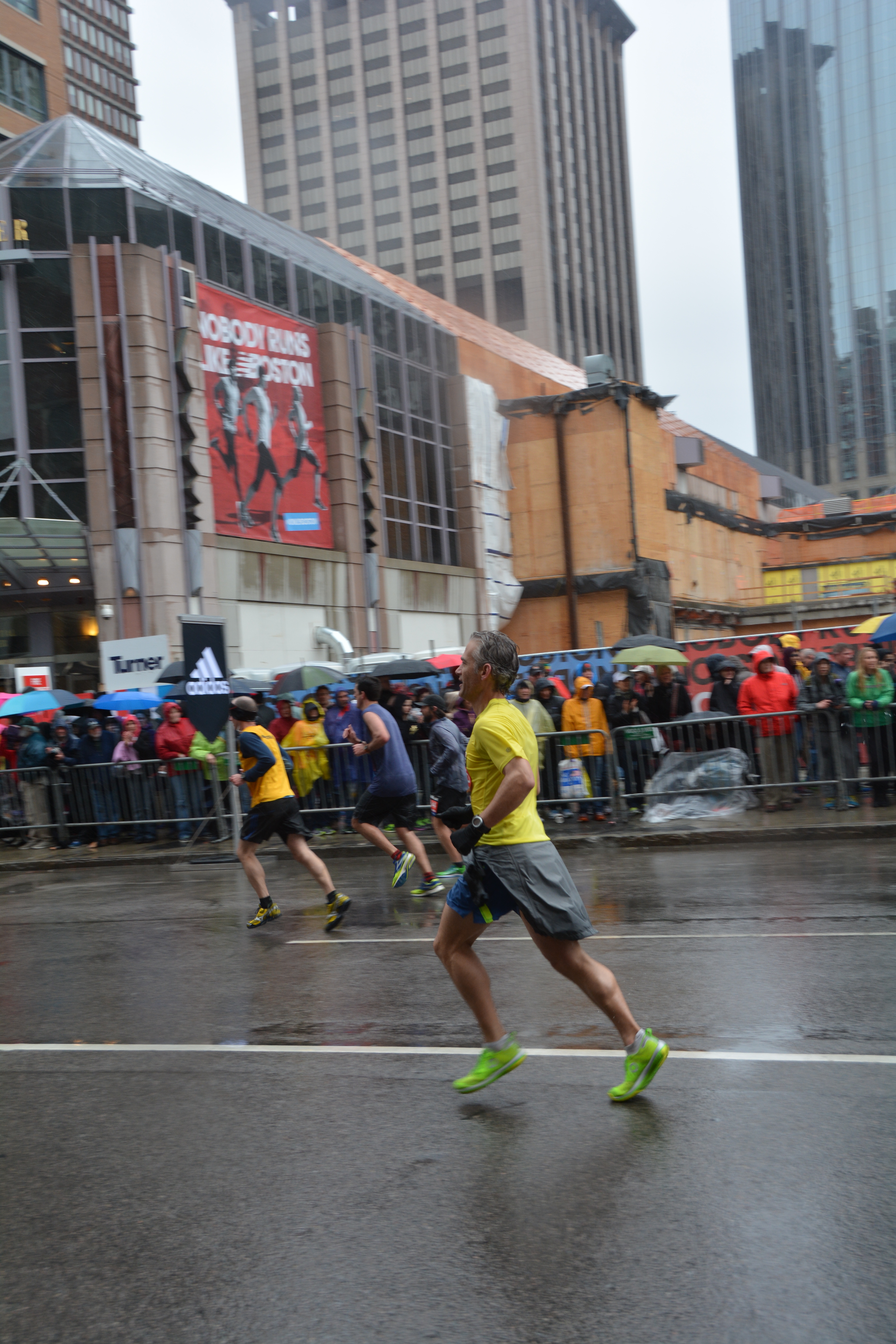
Second reason: weather conditions. Coming into race day, weather forecast did not look very good and that turned out to be the case. When John and I got on the buses a little before 7am it wasn’t raining yet.

https://twitter.com/minimallyshoddy/status/590084436387061760

However, the first downpour of the day started soon after we got inside the tents at the athletes’ village. Fortunately there was room for everybody to get inside. Eventually, the rain from this first band of showers ended and we exited the tent and lined up in the corrals. The beginning of the race was dry and the rain held off for the first 6 miles or so. However, after that it started up again and eventually it rained hard enough to totally soak my clothing. I was dressed in tech shorts, tech T-shirt, wool Icebreaker socks, wool Icebreaker liner gloves, and Skora TEMPOs. For my review of the TEMPO click here.

20150119_185500

I also slathered Alba Unpetroleum jelly all over my legs (and a few other places). Two benefits in the rain: warmth and chafing prevention. I brought a waterproof breathable shell tied around my waist to the starting line thinking I would have to put it on at some point. I had decided that my rule of thumb (pun intended) was going to be: once my hands got cold I would put it on. This shell can feel like putting on a sauna suit to drop weight for wrestling, or so I’m told, I was never a high school wrestler. So, I was trying to keep it off as long as possible. While of course I didn’t want to get hypothermia, I’d rather not be too hot either. So the rain came down and then eventually stopped again after a few miles and the wind picked up. A headwind is not ideal, but it did dry out my clothes, kind of, and we had a few dry miles. Later, it started raining again and the last third of the race was in a pretty steadily increasing rain. Temperatures started in the 40s and I doubt if they ever exceeded the 50 degree mark during the race. I never did put the jacket on because my hands never got cold. Unfortunately scores of others were not so lucky. On the way home, the RHSW and I ran into a lady who had to seek medical attention for hypothermia at about the 20 mile mark. She was so disappointed because the paramedics would not let her continue and ultimately she had to go to the hospital. When most people hear “rain!” they automatically assume that that’s a negative for racing. I’d say that the rain and the head wind were definitely not positives, but the cool temperatures were. Given the choice between: (1) last year, when temperatures rose into the upper 60s by the end of the race, with enough sun to give me a pretty decent sunburn; and (2) this year, with temperatures in the 40s, rain for most of the race, and a pretty strong headwind, I’ll still take this year any day. It was a thin line between hypothermia and being just barely warm enough. As I crossed the finish line, I slowed to a walk and was shivering and my teeth were chattering in less than a minute. I kept moving, putting on my waterproof breathable jacket while walking. Finally I got to the space blankets, which helped. I moved as quickly as I could to the gear check tents and the brisk walk warmed me up a little bit. Nevertheless I didn’t waste any time lingering and headed back to my hotel for a nice hot shower soon as I met up with the RHSW.

Third reason: course familiarity. There’s really no substitute for having run a course before. When I’m going to race a course and really want to do well on it, especially locally, I have always taken advantage of the ability to do some training runs on the course. I’ve done this for the Kansas City Marathon, for Hospital Hill, for the Heart of America Marathon, and even for some shorter runs. Personal experience with the elevation changes and apexes is invaluable. Last year, I had never run Boston before. I did have a highly detailed book that a friend had given me, including pictures and descriptions of the entire course. It was extremely helpful, but again, not a substitute. Of course your brain can process far more information when you’re experiencing something than when you’re just reading about it. I could tell the difference that familiarity made from one year to the next as I ran. I had a pretty good recall of what was coming up next. This helped immensely, because not only could I plan for upcoming difficult sections and take advantage of easy sections, I was also constantly comparing and evaluating whether or not I could improve in a section from last year. There were places where I was holding off last year because I didn’t know what was coming up next, but when you know you’re coming to the end of a tough stretch you can push through those last few seconds or minutes. While I was able to push harder on so many sections of the course because of the lower temperatures, but the combination of course familiarity with better conditions helped me take advantage. Another thing that I thought was kind of a fun reminder of the course layout was a 3-D topographic model that they had at the RunBase on Boylston. I stopped in there the night before and the RHSW got a shot of it. It’s a really cool model…layers of plywood giving you a pretty good appreciation for how the hills on the course lay out.

20150419_193333 20150419_193412

A further word about equipment. I ran this race in the Skora TEMPO. I’ve been running all of my long runs this training cycle in the TEMPO to evaluate the shoe in consideration for this race. I’m glad I decided to go with it. The thing I like about using this shoe for the marathon distance is that its elevated stack height and increased cushioning give me the ability to shift between a couple different landing zones. I typically land forefoot/midfoot. I find myself landing more towards the midfoot or a whole foot landing pattern with this shoe. I can tell from the wear pattern. I have noticed in all of my eleven marathons that shifting to a heel landing for as little as a couple hundred yards up to half a mile at some point during the last few miles helps out work out some of the discomfort that develops during a race, for instance, calf cramping. However, probably due to the cool conditions, I didn’t experience any cramping during this race.

Nutritionally, I followed my go-to protocol of the Western Australian carb loading method. Read my post about that here. I consumed the carb loading “elixir” all day long on Sunday after doing the shakeout/priming run with Jeremy and Nathan, fellow Skora Ambassadors. Nathan did the protocol as well. We saw Desi Linden (nee Davila) as we were running West along the Charles River. She makes it look easy, and she had a great race the next day. In our defense, we were in the middle of our warm-up miles. After our warm-up, it was interesting to see how much faster Nathan and Jeremy are than me. Nathan has 10 years on me and Jeremy has five (I’m counting backwards by the way, they’re younger!). Nathan pulled into the lead and Jeremy was pretty far ahead of me as well. I actually forgot to look and see when we started the hard running, but I was able to discern when they picked up the pace for the last 30 second all-out sprint so I followed suit and sure enough they stopped, which helped me figure out when to stop. Following this, I had a small low residue breakfast of scrambled eggs and a couple pieces of bacon. I had a late lunch consisting solely of a burger with cheese (no bun). I also had some candy to break up the monotony of the carb loading drink. On race morning, I finished off the carb loading drink, met John for a breakfast and had three fried eggs and some coffee. While were while riding the bus to the athletes village, I consumed most of the EFS gel that I had brought with me, about 400 cal worth, by sipping it slowly. At the athletes’ village, I had some coffee, some Clif shot blocks (not bad – they seemed innocuous enough to break the nothing new on race day rule), and a Gatorade carb energy drink to top off the tank. While not directly relevant to racing nutrition, when in Boston, make sure you try the claimed “original” Boston Cream Pie at Parker’s in the Omni! I had some Saturday and Monday, so still just one gluten cheat day per week.

My pacing strategy was better this year too. While it wasn’t all that bad last year, I seem to finally be making the transition to a negative split strategy under Kyle’s tutelage. Last year, before I started working with Kyle, I managed to stay fairly consistent over the course of the race. If I recall, none of my splits had anything other than a seven in front of them. However, the first few miles were probably a little too fast, then the Newton Hills slowed my pace. I had a few slow miles in the last 5 miles coming into downtown that probably could’ve been faster if I had paced better before, and they were starting to creep up towards the eight minute mark. This year however, I was remarkably consistent. My strategy was to hold off to around the 7:25 mark for the first 5 miles and then start pushing up the pace to goal pace of 7:15 as soon as I got past that five-mile mark. I was successful at doing this, and while pretty much everyone is going to fall off in the Newton Hills, I ran really strong through the hills. Thanks to my course familiarity, I was really able to put the hammer down as I came to the top at Boston College knowing that everything was downhill from there. They have a giant inflatable gateway at the top of the Newton Hills on the right that let you know that you’re done. And you really are – at that point the course gets a lot easier, coming into downtown it’s pretty much downhill or flat. I ran almost exactly even splits – maybe a little faster in the first half, but less than a minute.

I think I may have enjoyed myself even more this year than I did last year. I just felt so great during the entire race. It was amazing how the crowds came out even with the rain coming down. I try to make a point of high-fiving the little kids who have their hands out especially in the early sections of the course where there are more of them. Having the crowd support really helps in later miles, and I found that whenever I felt my pace was starting to flag a little bit it really helped to head over to the side of the road and pick up a boost of adrenaline with a few high fives. I never felt like I hit the wall. At Boston, the wall should be coming somewhere in or just after the Newton hills, but there was no perceptible change for me in energy level. Perhaps that’s because of the adrenaline of almost being done coupled with the crowd support and the knowledge that it’s all downhill during those last few miles. I’ve never felt better after crossing the finish line. I actually felt so fresh after crossing the finish line that I felt like I could have run some more. I try to leave it all out there, and while I ran the last mile hard and especially Boylston, I still felt like there was something left in the tank. I have to admit that I didn’t suffer enough to find out if I had a PR in me on Monday. My result was my second fastest (3:11:25). Before the race I would have thought that impossible. Now I have to wonder if I had pushed a little harder, might it have been there? However, you just can’t know how your body is going to react on a cold day.

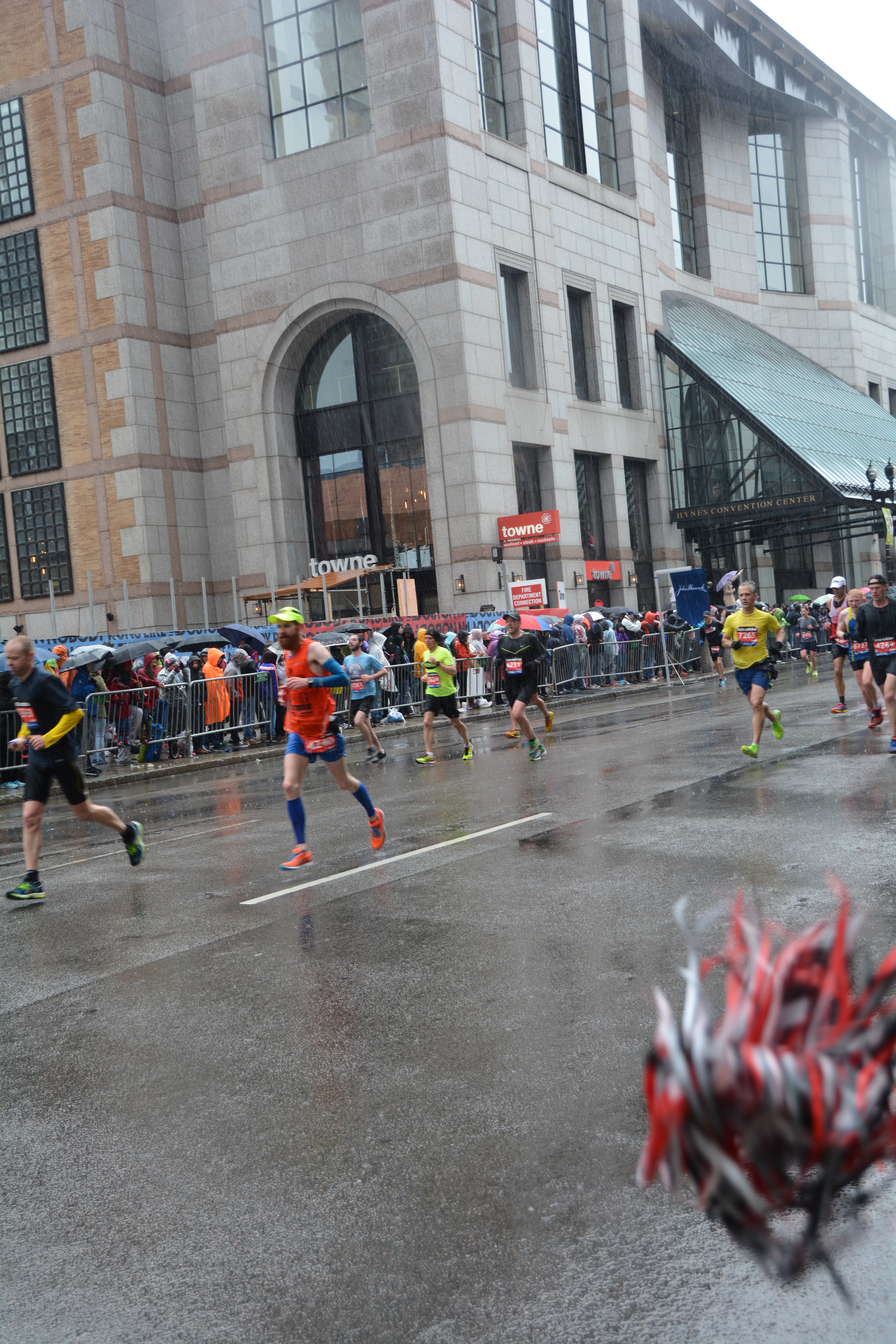
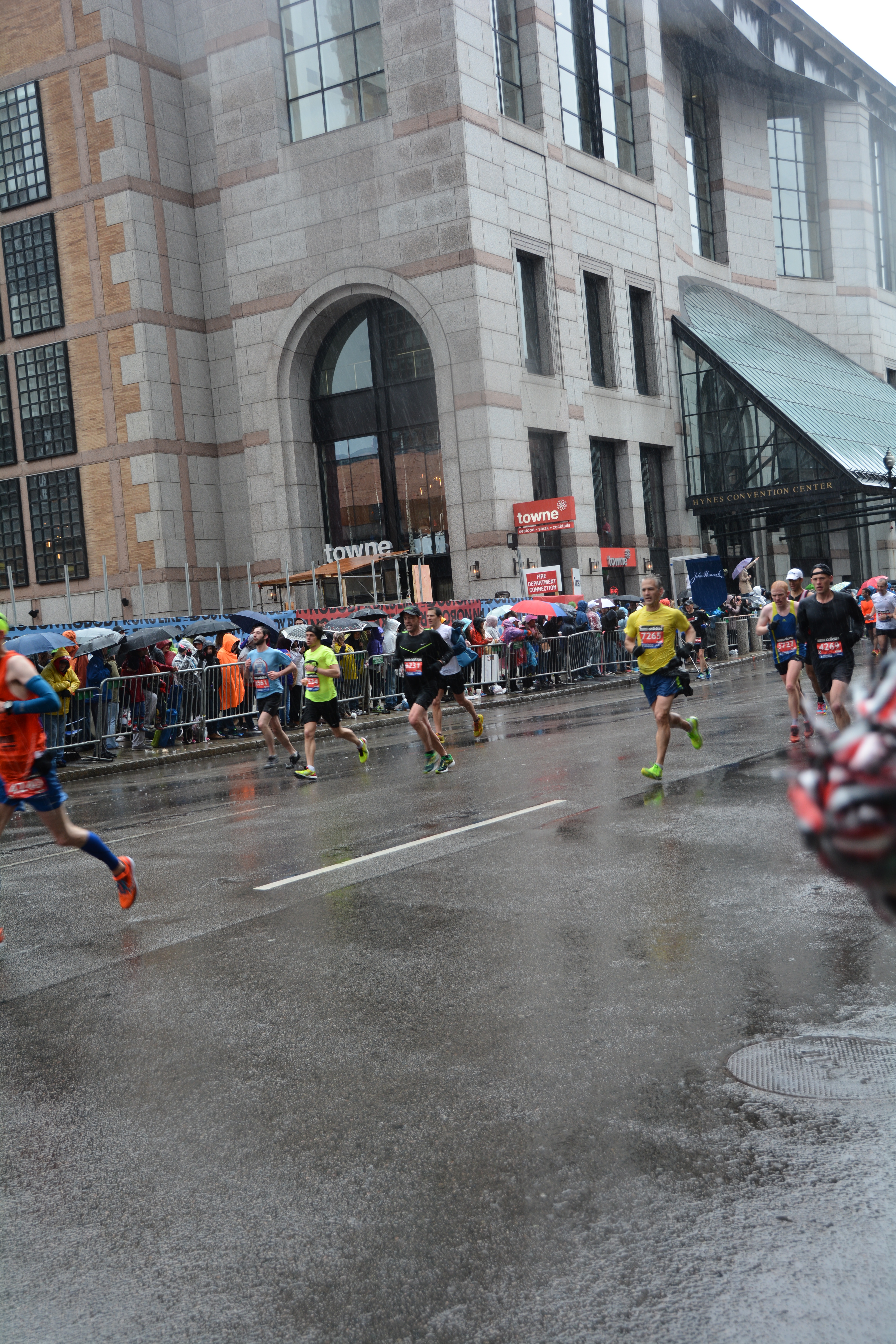
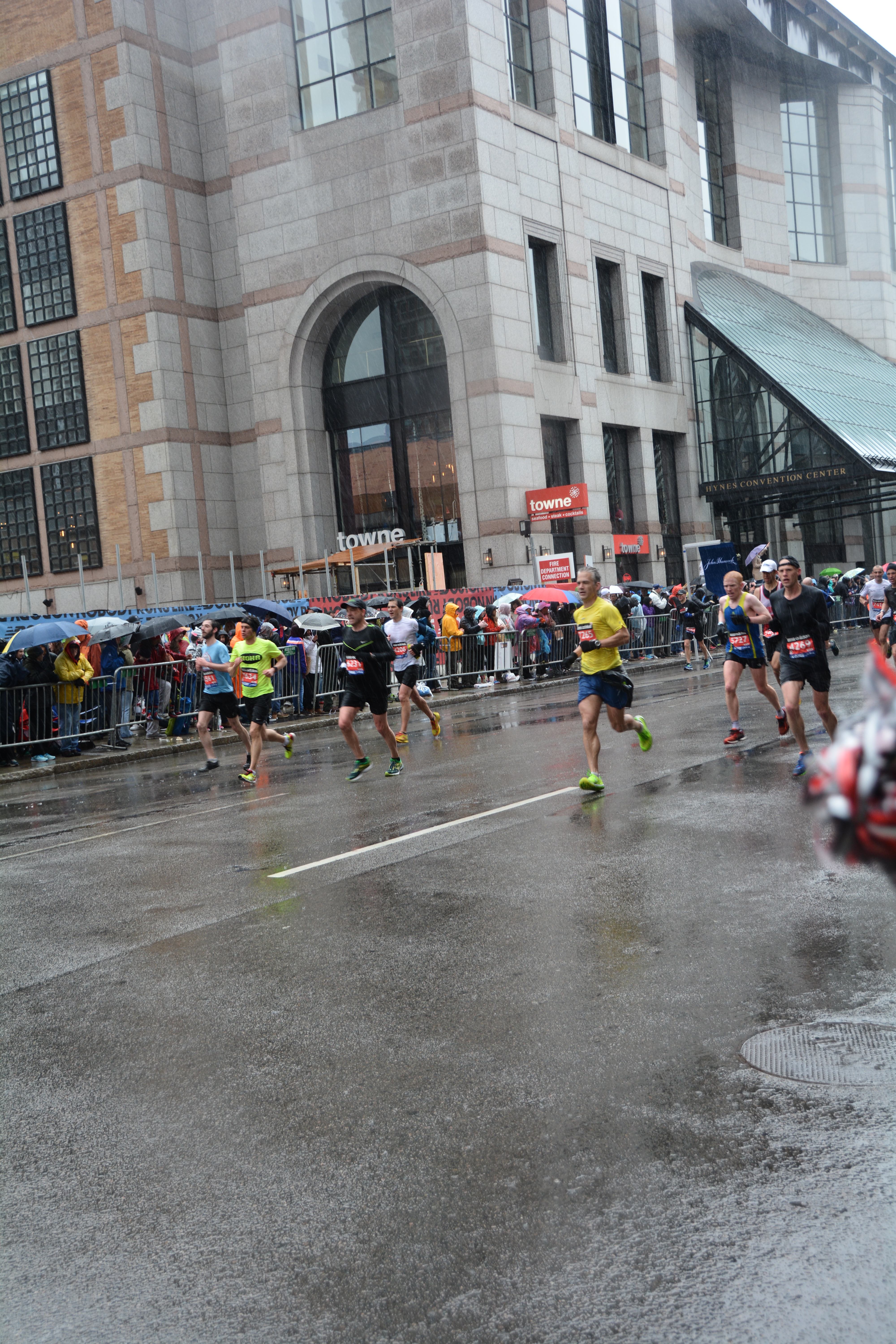
Boylston! The home stretch:

027 028 029 030 031

I guess it’s kind of hard to complain about someone who is willing to wave a pom-pon for hours at a time…

032 033 034 035

Closer…

035 036 037 038

Still closer…

039 040 041 042

Almost even with the RHSW:

043 044 045 046

Passing…

046 047 048 049

Last two:

050 051

I recovered really well afterwards as well. I think that’s because there was no dehydration thanks to the cool temperatures. I didn’t really have to do much more than take a swallow or two of Gatorade at maybe 10 aid stations or less. After the race and a shower, it really helps that the RHSW and I walked back down to Boylston to grab a snack before we met up with John and his family for dinner. It kept me from stiffening up. In fact, a lady who was hobbling after finishing the race even remarked how it was unfair that I was walking normally.
Running is also about the connections with people that you make over the years and this year’s Boston was special in that regard. I ran the race again with my good friend and neighbor, John. He had his immediate family and his extended family there to watch him race. This year we got to ride the bus to Hopkinton together. I also got to meet two fellow Skora Ambassadors, Jeremy and Nathan, and Brian, a Skora employee who coordinates the program at dinner Saturday night.

11169883_600583256045_8807086754094937592_n

Ok, there was a lot of shoe talk, to the chagrin of the spouses. It was just great to meet these other guys who share my perspective on running footwear and training. We all run in Skora shoes, and we’re all coached by Kyle, so that probably explains why we all ran so well! Nathan obliterated his goal of 2:50 by accelerating through the second half of the course. Jeremy PR’d at just over the three hour mark. Congratulations to both of those guys!

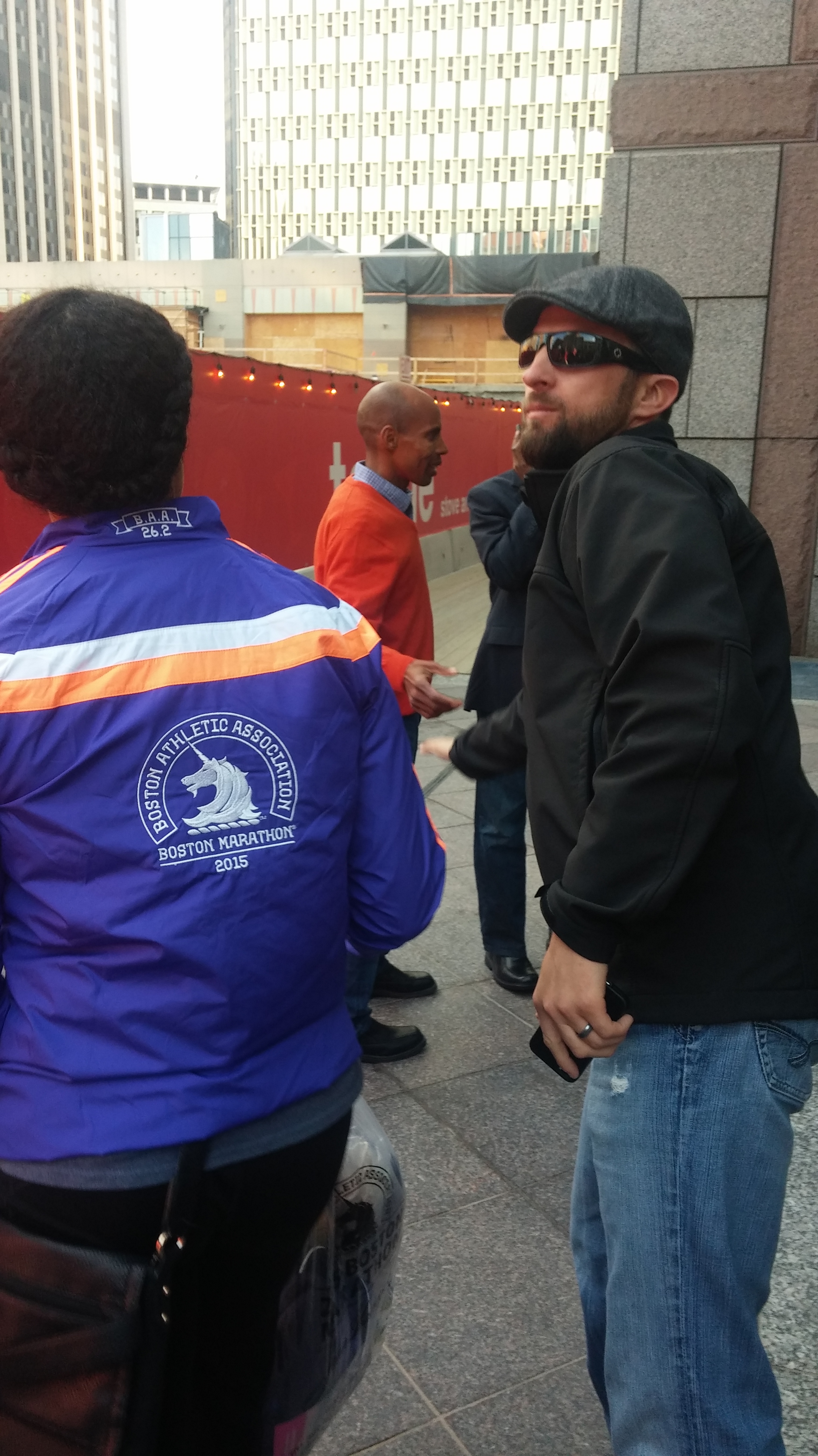
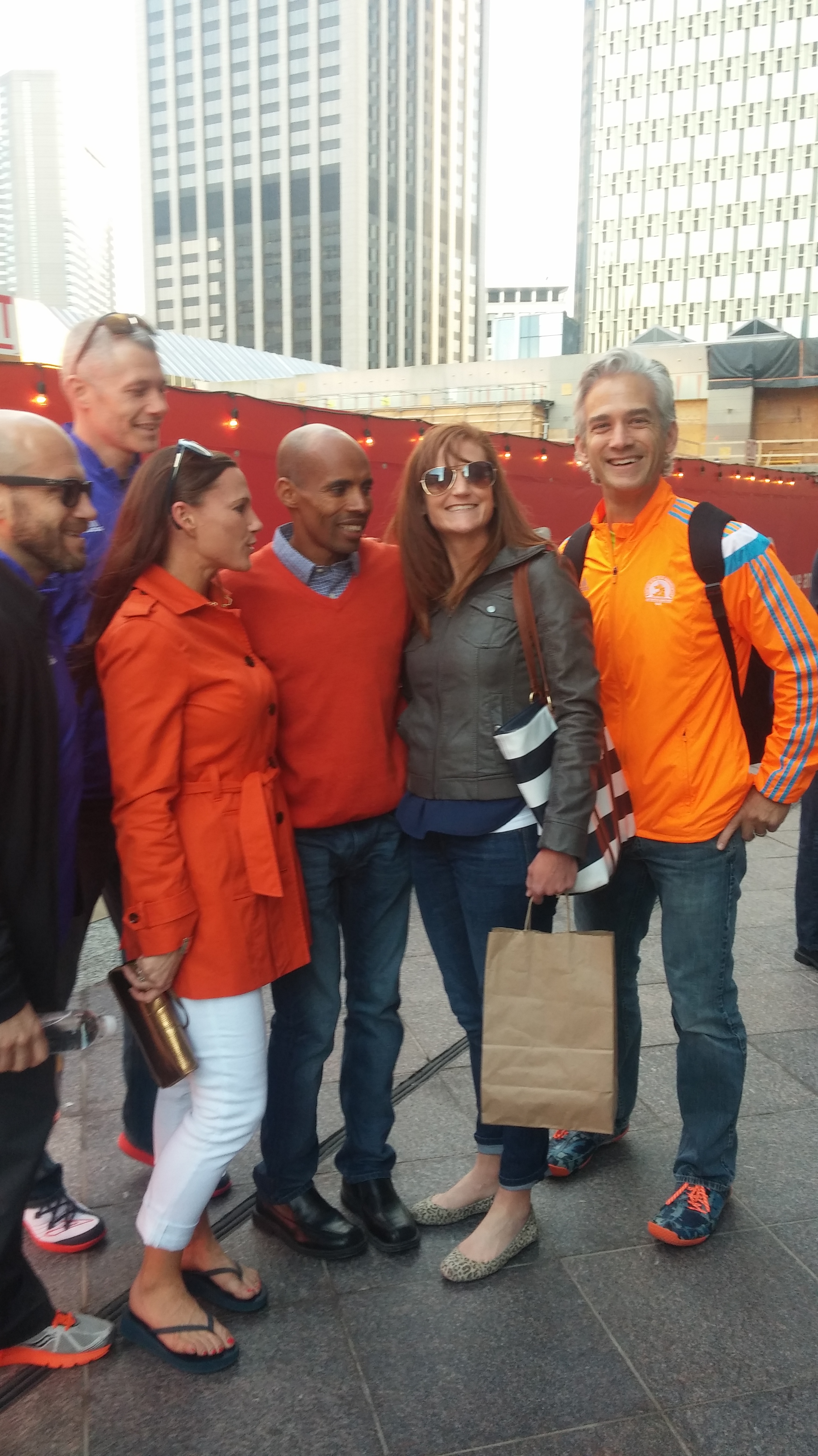
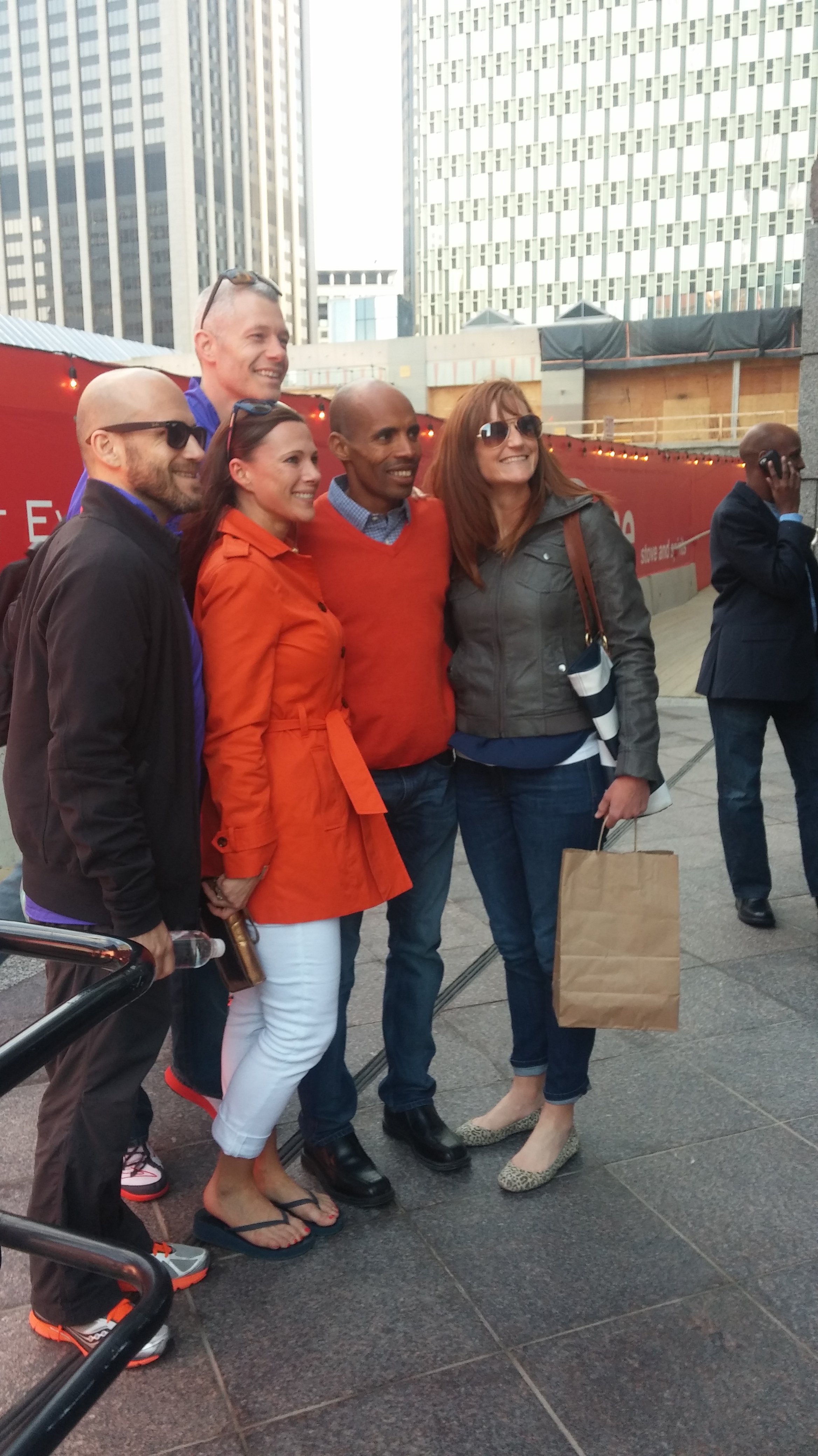
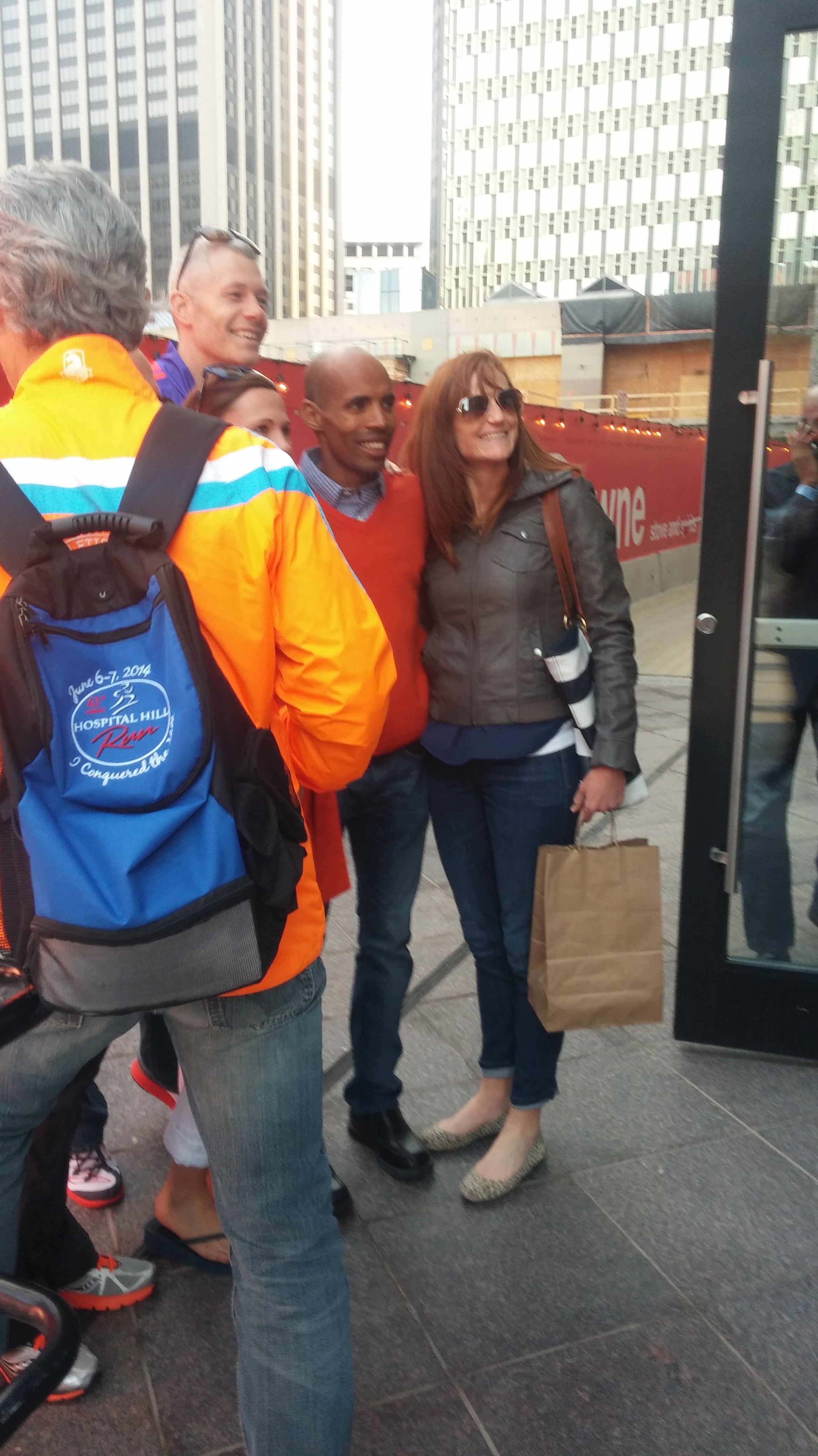
Also, I’m not really sure if this counts as a connection, but I was an elite magnet. I ran into Meb trying to sneak in the side door at the expo (he was sneaking, not me). I instantly recognized him, as did a few others. He graciously took a group picture, and I shook his hand. I was so star struck I couldn’t even think of anything to say. I wish I’d had a chance to gather my thoughts!

20150418_174805 20150418_174804 20150418_174803 20150418_174758 20150418_174756 20150418_174755 20150418_174754 20150418_174753 20150418_174752 20150418_174742 20150418_174741 20150418_174739

Here’s a couple of me and the RHSW on the way back from the expo, in front of a really gnarly tree on Boston Common:

20150418_183533 20150418_183531

I’m awkwardly trying to a) not obscure the cool part of the tree; and b) make contact with the RHSW.

The final results:

participant

Name Kardis, Theodore (USA)
age group Male 40-44
bib number 7265
State/ Province KS
biography n.a.
team
My Runner Add runner to 'My Runners'

totals

place (M/W) 4469
place (ag) 816
place (total) 4931
time total (net) 03:11:25
time total (gun) 03:16:36

race state

race state finished
last split Finish Net

splits

Split time of day time diff min/mile miles/h
5K 10:27:58AM 00:22:45 22:45 07:20 8.20
10K 10:50:51AM 00:45:38 22:53 07:22 8.15
15K 11:13:20AM 01:08:07 22:29 07:15 8.29
20K 11:35:45AM 01:30:33 22:26 07:14 8.31
HALF 11:40:39AM 01:35:27 04:54 07:12 8.34
25K 11:58:12AM 01:52:59 17:32 07:14 8.30
30K 12:21:07PM 02:15:54 22:55 07:23 8.14
35K 12:44:13PM 02:39:00 23:06 07:26 8.07
40K 01:06:45PM 03:01:32 22:32 07:16 8.27
Finish Net 01:16:37PM 03:11:25 09:53 07:15 8.29

I love Boston, its marathon, and its people. I’ve already qualified for 2016, and I’ll be back if at all possible!

The Black Arrow: Skora TEMPO shoe review @skorarunning

Running shoes are like different arrows in the hunter’s quiver. A good bow-hunter will match the arrow to their bow, their ability, and their objective. There are many variables, but the point is that there is an option that is preferred to all others for a given task – and it may be different for each individual.

With the addition of the all-new TEMPO to its line-up, Skora adds a significant new arrow to the runner’s quiver. I’m letting my geek bleed through a bit – Tolkien fans will understand the reference, but I won’t strain the analogy. TEMPO is both more and less shoe than Skora’s other models in certain respects, but the important thing is that it’s just a little bit different. The TEMPO remains true to Skora’s core mission of zero-drop, flexible, anatomically fitted shoes for runners who want something in between them in the road, but don’t want to sacrifice a connection to the ground with an inch of marshmallows either.

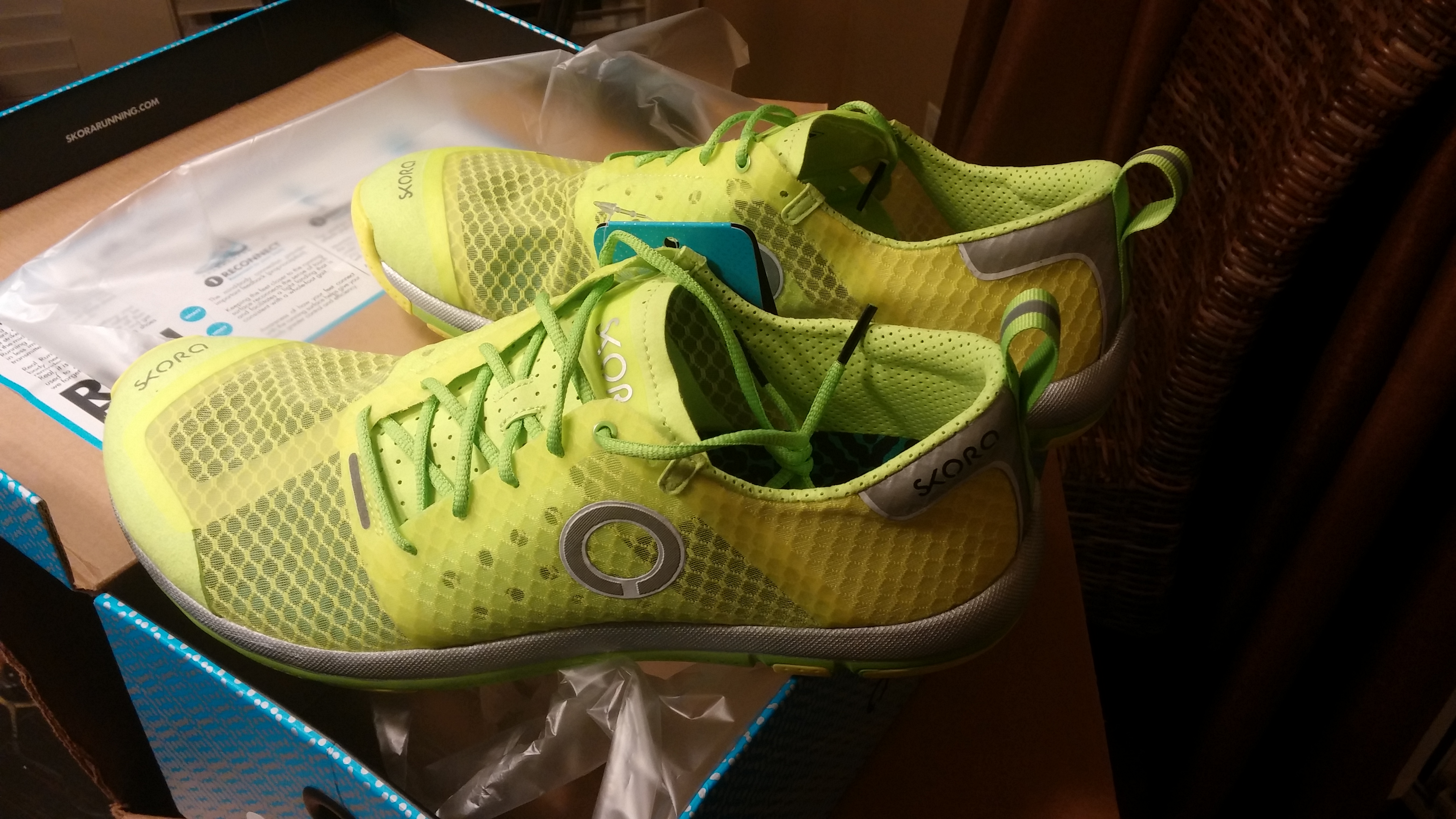
Right out of the box, you can see that the TEMPO is all-new:

20150119_185500

The first thing that struck me was that the shoe was incredibly light. Second, the one-piece upper is so diaphanous you actually have to be careful about your sock choice if you want to avoid changing the look of the shoe (white/light is best, I think). For instance, here’s what happened when I paired up some two-tone socks with dark toe-boxes:

20150119_191130

Unless all your running socks have polka dots on them, and you don’t want anyone to know, it’s not a problem. Quite the contrary. The see-through nature of the upper means it’s really breezy too. While I received the shoe in winter, I mitigated the cold with some wool socks. However, now we’re into the 9 months of the year where this breathability is a real plus.

After my first trial run in them, I immediately could tell that I tend to land farther back in this shoe than any other Skora shoe I’ve run in. The contact patch of the shoe seems flatter to me overall. You can see where the bright green area in the midfoot is dirty from ground contact:

20150120_135411

I also found the shoe to have more arch support than Skora’s other models. While the FIT is my personal Skora Goldilocks shoe, the prospect of a shoe with a little more arch support is a plus for many. As I write this, some 200 miles after my first run in them, including about seven long runs around the 20 mile mark, while I can perceive the difference, it’s not a negative. The additional cushioning makes TEMPO a great distance shoe for pavement, which is the surface I log most of my long runs on.

While Imelda Marcos’ 3,000 shoe collection is nothing to aspire to, there are some good reasons to have some variety in your running shoe lineup. If you run every day, you ought to have at least two pairs of running shoes, to give them a chance to fully air dry before you wear them again. Supposedly, this will make a pair last longer than if you just wear one pair over and over again and they won’t stink. Also, more color coordination options! More fundamentally though, I think running in more than one type of shoe (as opposed to just two different pairs of the same model) has some advantages as well. I’m not going to make any crazy claims about injury prevention and I don’t have a degree in biomechanics, but it seems to me that the same wisdom that suggests you should vary your running surfaces applies here as well. You don’t want to run every day on a treadmill, or on pavement. Throw in a crushed gravel trail, some dirt single-track, a cushioned jogging trail. Even if you’re stuck on pavement, you can choose flat courses or hills. I try to mix up my shoes as well – some days I’ll pick a lighter, less cushioned shoe like the PHASE if I’m going to be on a cushioned surface already, like the track. Pavement runs mean more a more cushioned shoe like the FIT or now, the TEMPO. There are many reasons to have many shoes, but the best reason is to have a shoe that you feel is ideally suited to a specific purpose.

Skora’s line-up now includes a combination of different outsoles, insoles, and uppers that lets you find a shoe that’s well-suited to your personal preference. In this spectrum, the TEMPO is Skora’s most cushioned shoe. While all Skoras are zero-drop, the stack height (how high your foot, in the shoe, is off the ground) of the TEMPO is higher: 22 mm (compared to the FIT at 16). It’s zero-drop, because both your heel and your forefoot are both 22 mm off the ground.

Here’s a visual comparison of the stack height of TEMPO and FIT:

20150119_185949

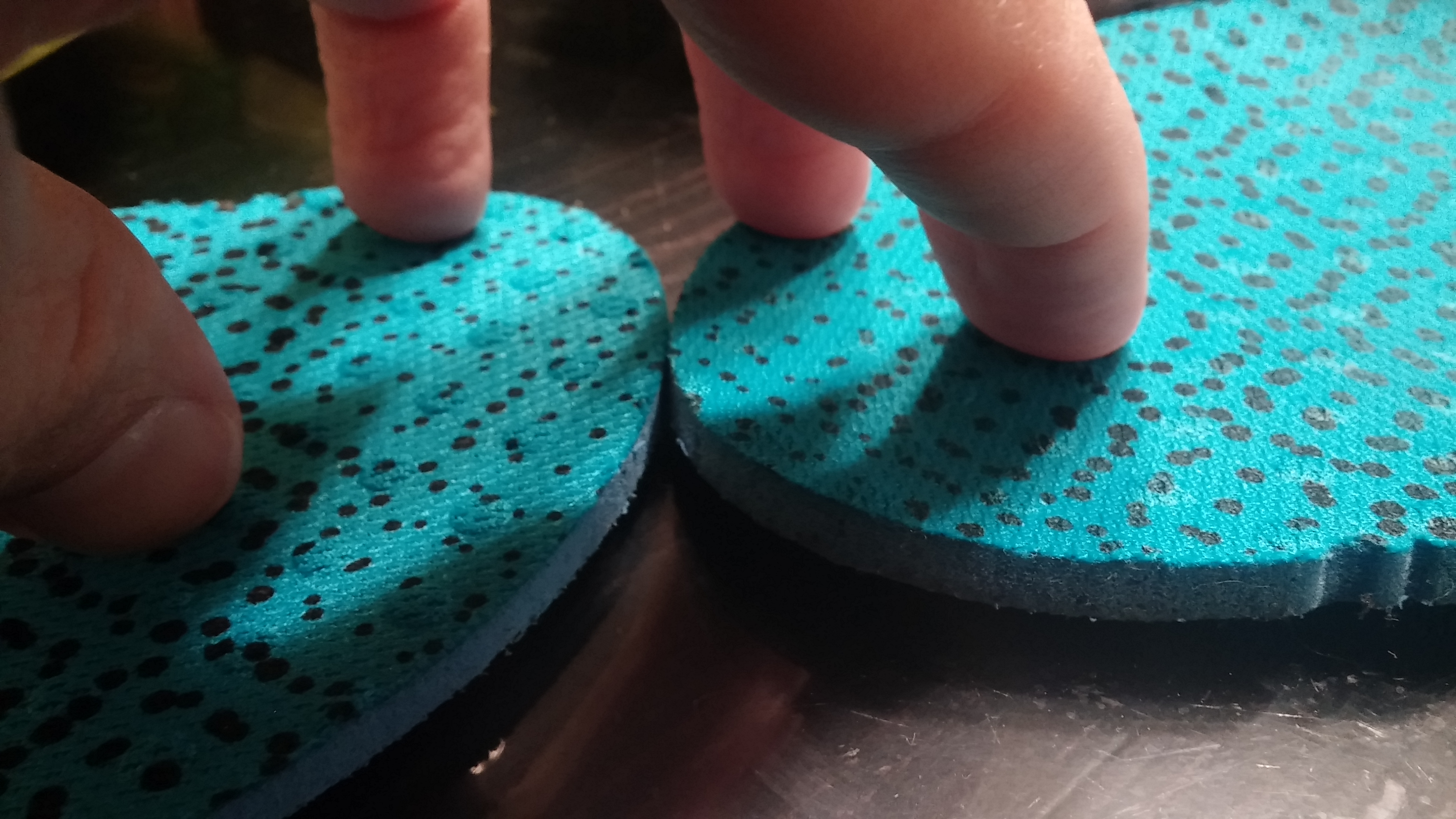
You can also see that Skora uses their thickest, most cushioned insole in TEMPO – it appears to be the same thickness as the FIT insole:

20150119_190003

The TEMPO has the same wonderful, roomy toe-box as other Skoras. I think this is an essential part of running shoe design, too often ignored by other companies.

I didn’t have any problems getting the shoe to fit me – it seems true to size, i.e., the size I measure at is the size I wear, and it fits well without slopping around on my foot. It’s not as snug as FIT, but the upper isn’t as stretchy as FIT’s. Asymmetrical laces adequately lock down the midfoot and heel.

Like I said, I’ve been really focusing on using this shoe for long runs, in anticipation of running Boston in it. I’ve had zero problems with it over 200+ miles and a half dozen 20 milers. The shoe is really holding up well. I don’t see any failure points developing on it anywhere, and wear is minimal. I’m guessing it will far exceed the 500 mile mark.

One of the things that appeals to me when considering the shoe as a marathon shoe is the variety of foot strike positions it accommodates. Since transitioning to barefoot and minimal shoes several years ago, I rarely heel strike. At faster paces, I’m towards the front of the midfoot, at slower paces it’s more of a whole foot/midfoot landing. In the marathon, no matter what you are wearing, you’re going to have some muscle fatigue at some point. I’ve run ten. In several of them, I’ve found that taking a break and doing a little bit of heel striking at some point after the twenty mile mark helps to work out some of the kinks so I can get back to my usual landing. The TEMPO makes this a little more comfortable than some other shoes. In fact, during a recent four mile race over really hilly pavement at a pretty fast pace, I was amazed to find myself naturally landing farther back on my foot than I expected – not quite a heel strike but close. I think a shoe that gives you some options in how you use it is a great arrow to have in the quiver. I probably wouldn’t recommend heel-striking in this shoe all the time, but that’s just me.

To sum up, I’m thrilled to have the TEMPO in my running “quiver.” It’s an arrow I’ll pull out over and over again. After Boston, I’ll update this post and let you know if it made me feel like Bard slaying Smaug!

To check out the new TEMPO – available today, April 6, 2015, just click through the banner on the right side of this page!

Objectivity statement: I’m a Skora Ambassador, as you may have noticed on this page. A pre-production TEMPO was provided to me free of charge. I like free shoes, but they don’t render me a mindless automaton. Skora doesn’t control my content, and I like to exercise my free will. If I like something, I’ll tell you. If I don’t like something, I’ll tell you that too. I’ve reviewed a lot of shoes I don’t like. I haven’t reviewed any Skoras I didn’t like, but I definitely have my preferences!

Tune-up race: Westport St. Pat’s 4M #HHRAMBASSADOR @skorarunning

A few weekends ago I ran the Westport St. Patrick’s Day Run, a 4 mile event I did a few years back. I had a reason to return this year: I changed law firms this past fall, and my new office is right at the start/finish line of this race – very convenient! No porta-potties for me.
The course is really challenging – a lot of elevation change. That makes it a good Hospital Hill Run tune-up! If I’m not mistaken, it does share a brief segment or two with the HHR, albeit in the opposite direction. I went out pretty hard, because this is one of those races where there are a ton of people, but not everyone realizes where they should sort out to (i.e., if you actually start by your expected pace sign, you’re going to have a ton of people in front of you that aren’t going to run anywhere near that pace). So, I stood about 10 yards off the start line – not enough to embarrass myself with the guys wearing singlets, but close enough to not get caught behind the iPod crowd. After running down the first hill and heading up to the first turn, I felt like I’d placed myself perfectly – there was enough room to pass a few people who were overly optimistic, and by the same token I didn’t get passed by anyone.

At bigger races, I feel like people do a much better job of seeding themselves into “corrals” even if there aren’t any. Hospital Hill actually has corrals, which are based on the expected pace you submit with your entry, so be honest (with yourself!). You’ll be happier, and so will your fellow runners.

I’d say I ran this race at around 90-95% of max effort. I was working hard, but I didn’t go all out. It’s a tuneup race, not a goal race. My next two goal races are the Boston Marathon and the Hospital Hill Run (a half marathon).

I ran this race in a pre-production sample of Skora’s new TEMPO shoe, soon to be available to the public. Check back soon for my review of the shoe, which drops Monday, 4/6 (the shoe, not my review, which probably isn’t cool enough to “drop”).

I guess I’m a contrarian, but I decided to wear red for this St. Pat’s run. It does make it easier to find me in these pictures.

Farthest back:

Rob Smith Photography: 2015 0314 St Patricks Day Run &emdash; KCTC_StPatsRun_0226_2820

I am cranking at this point. Thanks to my red shirt, some guy in the crowd yelled, “Go red dude!” I don’t think he was mocking me…at least I found it to be motivational:

Rob Smith Photography: 2015 0314 St Patricks Day Run &emdash; KCTC_StPatsRun_0227_2821

Here I am, gulping for air:

Rob Smith Photography: 2015 0314 St Patricks Day Run &emdash; KCTC_StPatsRun_0228_2822

Finally, if the embed works, here’s a video of the finish (nice touch, RD!):

http://results.chronotrack.com/event/results/event/event-10487?entryID=13199827&lc=en

I managed a third in my age group at this race – not bad for a tuneup!

Emerging from Hibernation #HHRAMBASSADOR

Spring has finally sprung in Kansas City! Late last week the polar vortex finally receded and our extended February finally gave way to some warm temps and the barest emergence of green. I know, it’s not really Spring yet, but it finally doesn’t feel quite so much like winter.

It was a tough winter for me. A fall on the ice last year meant I was a lot more careful about what conditions I would run outside in this year. I cobbled together a variety of treadmill and 1/10 mile indoor track sessions to make it through, along with as much running outdoors as possible. Don’t get me wrong. I was out there – I’d much rather run in the cold than on the hamster wheel.

If you’re thinking about the Hospital Hill Run in June, what better time to get into a training plan (they have 6 different plans, something for everyone) and get out there for some beautiful spring running! In fact, come join us for a training kickoff fun run tonight – check out their Facebook page.

This post doesn’t have a lot of substance, but I’ve been in a bit of a blogging funk lately. My blog “drafts” folder has several unfinished posts including one on running in the dark (I got discouraged after a great article by RW’s Mark Parent totally stole my thunder, substantively and thematically. We were definitely thinking along the same lines). Spring has rejuvenated me – more to come soon!

Training + Racing = Tracing? #HHRAMBASSADOR

I listened to a podcast interview of Greg Meyer recently, whose claim to fame has recently been amended to “the last American to win Boston before Meb.” It was a different world back in the 70s and 80s, where Greg and other elites routinely raced on multiple consecutive weekends, sometimes even in close proximity to their goal races. Nowadays, training schedules are carefully calibrated to peak for major events, with a lot less racing in between.

None of us mere mortals will ever have to answer the question: “how did you keep up your 100 mile training week while winning that indoor mile?” However, some of the more general things that Greg had to say have some application for us as well. Basically, Greg liked to race. He was competitive. Who knows if he would have had the same level of success in the modern model of less racing? Maybe he would have lost motivation.

I tend to agree with him. I’m not racing every week, but I do think it helps me stay motivated to always have something to be looking forward to. Every year, I target two or three key races I’d like to participate in, put them on the calendar, sign up to commit, and adjust my training schedule around them. But that leaves wide open expanses of months at a time. Filling in some of those gaps, for me, is a great way to stay motivated and have something to look forward to. An added benefit is that you develop a baseline of how your training is going, and you can use that to adjust your training for your goal race. For instance, if you’re training for a half marathon, like, just say, for instance, Hospital Hill, (click here to register!) you could race a 5K, then use any number of online pace calculators to convert your 5K performance into an expected finish time and pace for the 13.1 mile distance. Of course these calculators aren’t perfect, your results may vary, etc., but they are kind of fun to tinker around with. Some of the better ones can adjust for temperature, elevation change, and other variables.

I love “tracing” – racing during training. (It helps if you say it like Tony the Tiger saying “They’re grrrrrrrreat!”)

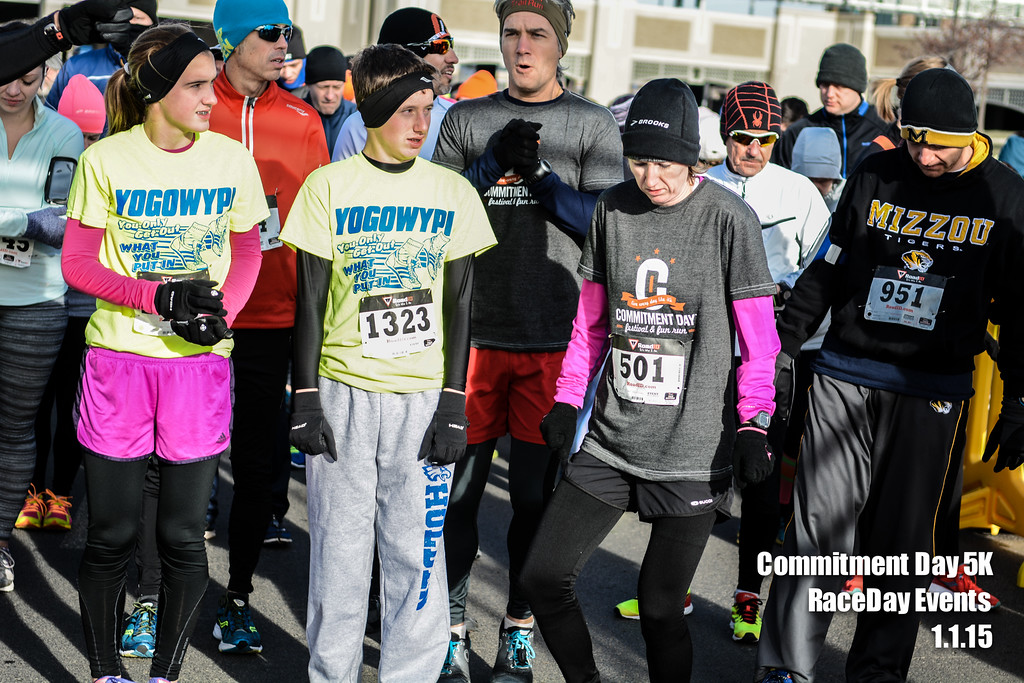
So, what have I been doing to practice what I preach? I signed up for and ran the aptly-named “Commitment Day 5K” on New Year’s Day. First, shout-out (do the kids still say that?) to my niece, Kaitlin, who knocked it out of the park singing the National Anthem prior to race start. Bummed there’s no picture! Unfortunately, all I’ve got to offer are pictures of me. Also, I got to meet fellow Skora Ambassador Sarah, who snapped a shoe selfie of us that I can’t seem to locate any more. Pretty cool that in the whole country, two of us are running some of the same races!

CommitmentDay-2015-0072-XL

If I was wearing my Mizzou gear, I might be as happy as Bib # 951!

CommitmentDay-2015-0095-XL

Yep, it’s cold. 25F, but a brisk wind.

CommitmentDay-2015-0279-XL

Finished! No PR, but not bad on a hilly course on a windy day.

CommitmentDay-2015-0280-XL

More of the same…

CommitmentDay-2015-0281-XL

Bear with me…

CommitmentDay-2015-0282-XL

Okay, last one. Happy tracing!

@skorarunning FIT: The 900 mile exit interview

I recently had to retire my first pair of Skora FITs. At just over 900 miles, they finally suffered a failure that compromised the “structural integrity” of the shoe. Yes, that’s right, shoes wear out. But at 900 miles, I feel like I’ve gotten my money’s worth out of a pair, don’t you? (Disclaimer, the shoes I’m talking about were advance samples provided to me free of charge to review, so more accurately I should say I feel like I’ve gotten the manufacturer’s suggested retail price out of them). The big running shoe companies all tell you to abandon your shoes at 6 months or 300-500 miles. That recommendation is primarily based on the compression of the thick wedge of EVA foam they use to cushion the shoe. In shoes with minimal (IMO, adequate) cushioning, you can pretty much wear the things until you actually perceive a failure – not based on a guess.

My FITs had a job to do for me as a runner: provide as little interference as possible, while ensuring comfort and control during my marathon road training and racing. My full-blown review of this shoe can be found here. Let’s talk to the FIT on the way out the door:

Tad: Did the job match your expectations?

FIT: Definitely. Your marathon training and racing are what I’m made for.

Tad: Do you think you met my expectations?

FIT: Yes, I’d say so. I can tell you’re a minimalist runner who strikes the ground naturally with the mid-foot, which meshes well with my zero-drop design. I put in 900 miles, giving you lightweight cushioning and staying out of your way. That’s pretty much what you asked me to do when I started. I thought we worked well together – also, you didn’t usually run me on consecutive days, which I think contributed to my longevity.

Tad: Did you feel like the work you were doing aligned with your personal goals and interests?

FIT: Yes, I’m an all-purpose training shoe, built for a wide variety of surfaces and light enough to race in. Like Frank Shorter says, running fast is more fun than running slow!

Tad: Did you have the tools and resources you needed to effectively do your job?

FIT: You bet, I brought all that with me. Here’s my resume.

Tad: Describe the workplace environment.

FIT: Almost all outdoors, pavement and concrete, I saw all four seasons. Thanks for taking me to the track occasionally!

Tad: What do you feel good about accomplishing in your job and in your time here?

FIT: I was thrilled when you asked me to run the Boston Marathon with you after a few weeks of training. I appreciated the confidence you expressed in me at that distance and I know how much the race meant to you. Other than that, we put in a lot of training miles together. As you know, there’s just no substitute for wearing out the rubber:

20150105_123545

Tad: What factors contributed to your decision to retire?

FIT: Well, as you know, the place where the airmesh upper connects to the sole separated:

20150105_123537

That was on my right. If I say so myself, there wasn’t an identical failure point on the same outside face of my left – in fact there wasn’t even one developing. However, there was an area developing on the inside of my left:

20150105_123611

This is basically what I looked like on the right side for several hundred miles before the hole appeared. I don’t feel like this compromised my function at all up until the very end, which is why I decided to hang it up.

Tad: What are your future plans?

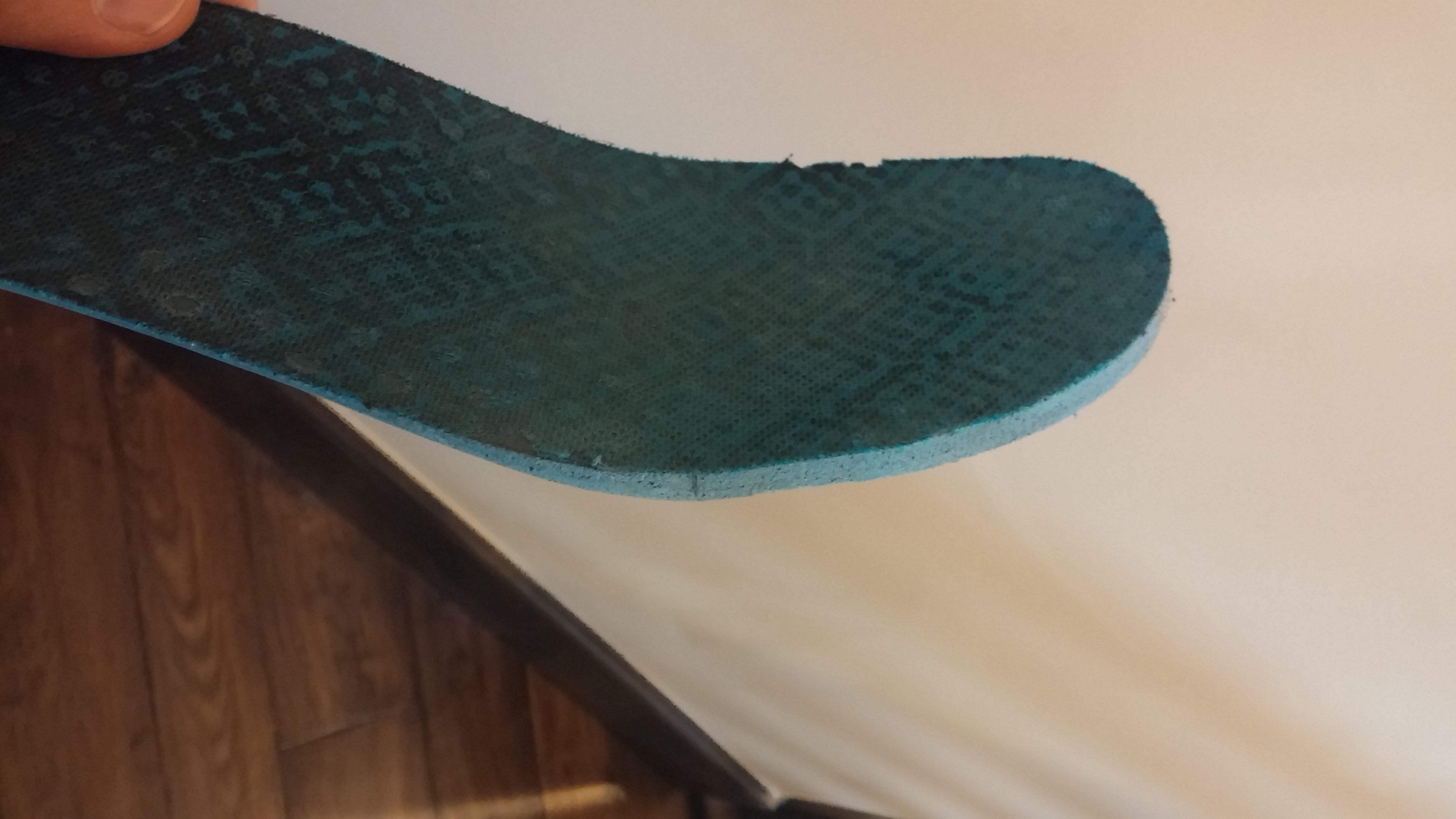
FIT: Well, I’d like you to re-use my insoles in your FORMs. They’re a little bit thicker than the stock FORM insole, so you might like a bit more cushioning on occasion:

20150105_123637

Also, don’t forget to take off your LED light and my laces:

20150105_123647

Tad: Would you recommend this place to work to one of your friends?

FIT: Yes, and I understand you may already be employing some of my colleagues…

DSC_2527 - Copy

In fact, you had me train my replacement, remember?

20141220_104421

Tad: Thanks for your year of service to the company!


This “0” is Royal: 3:09! – “seeking the uncomfortable” in Chicago @skorarunning

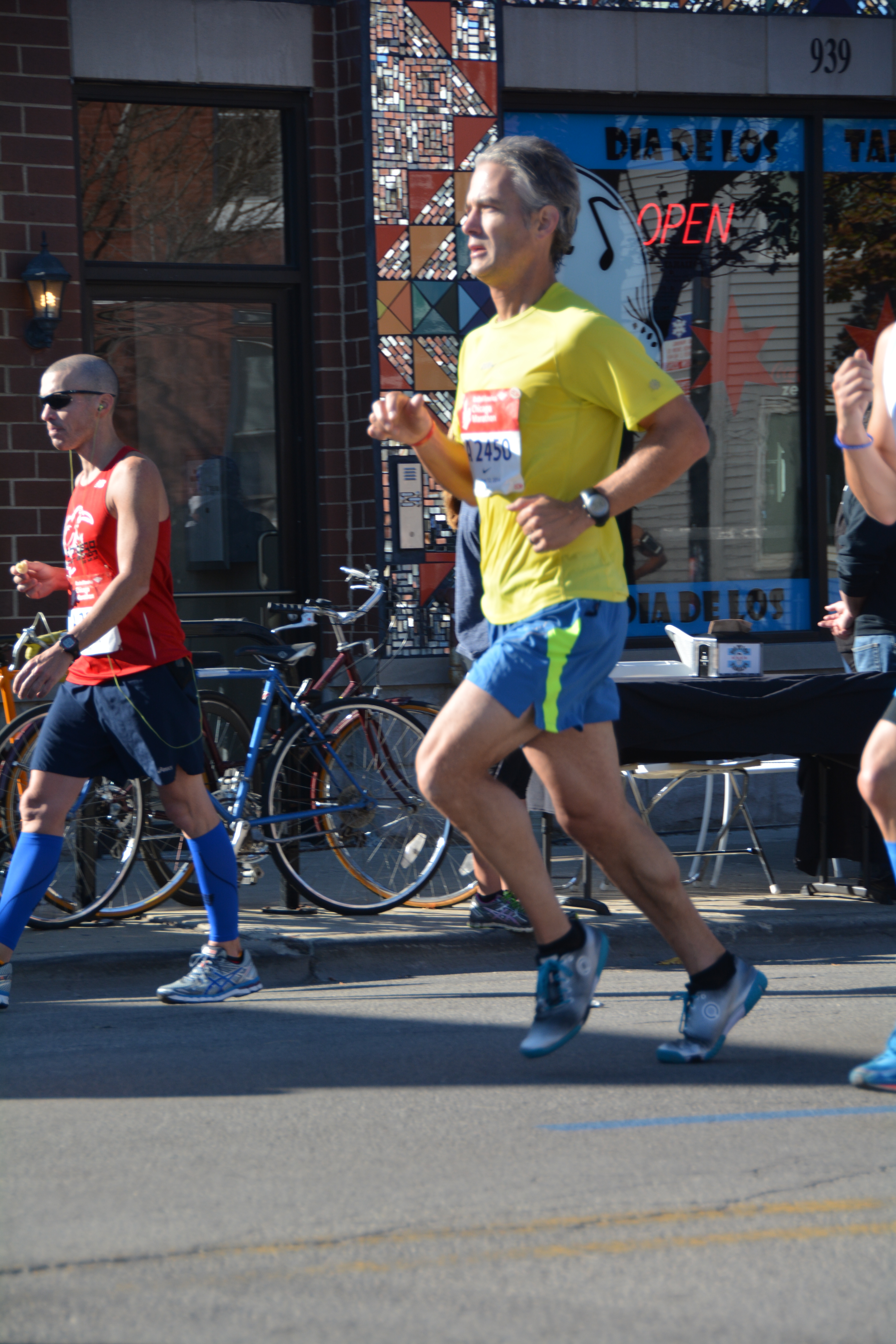
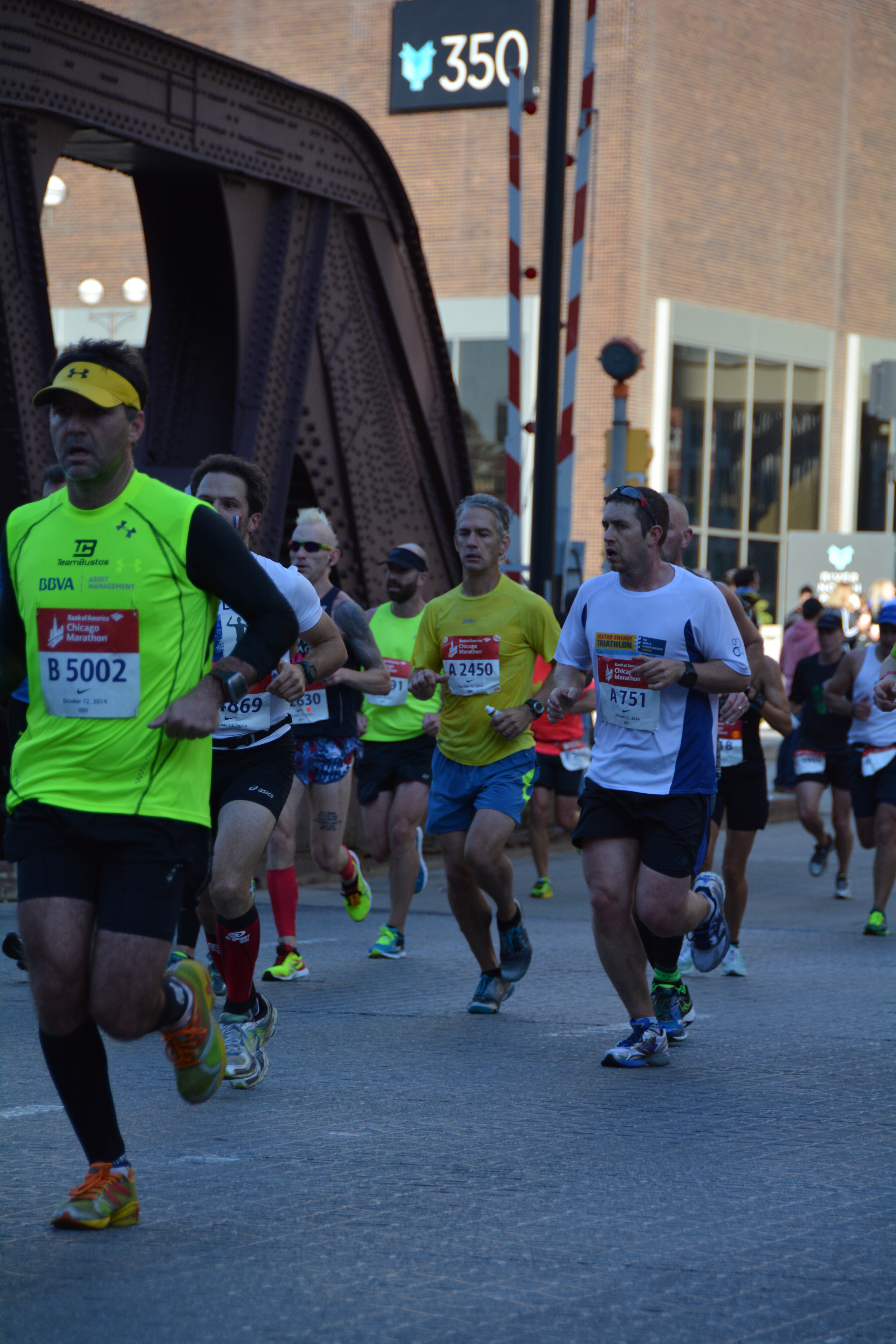
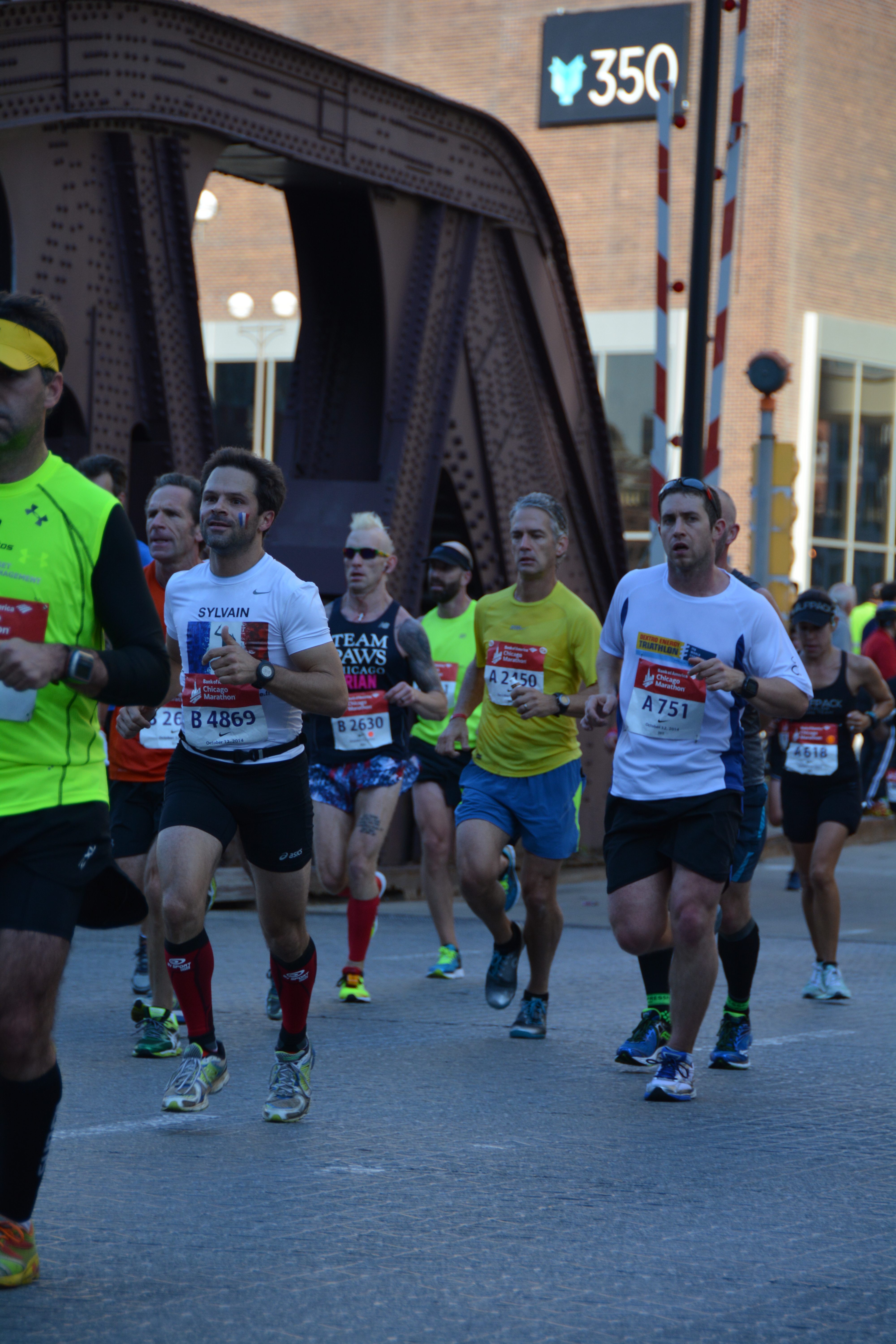
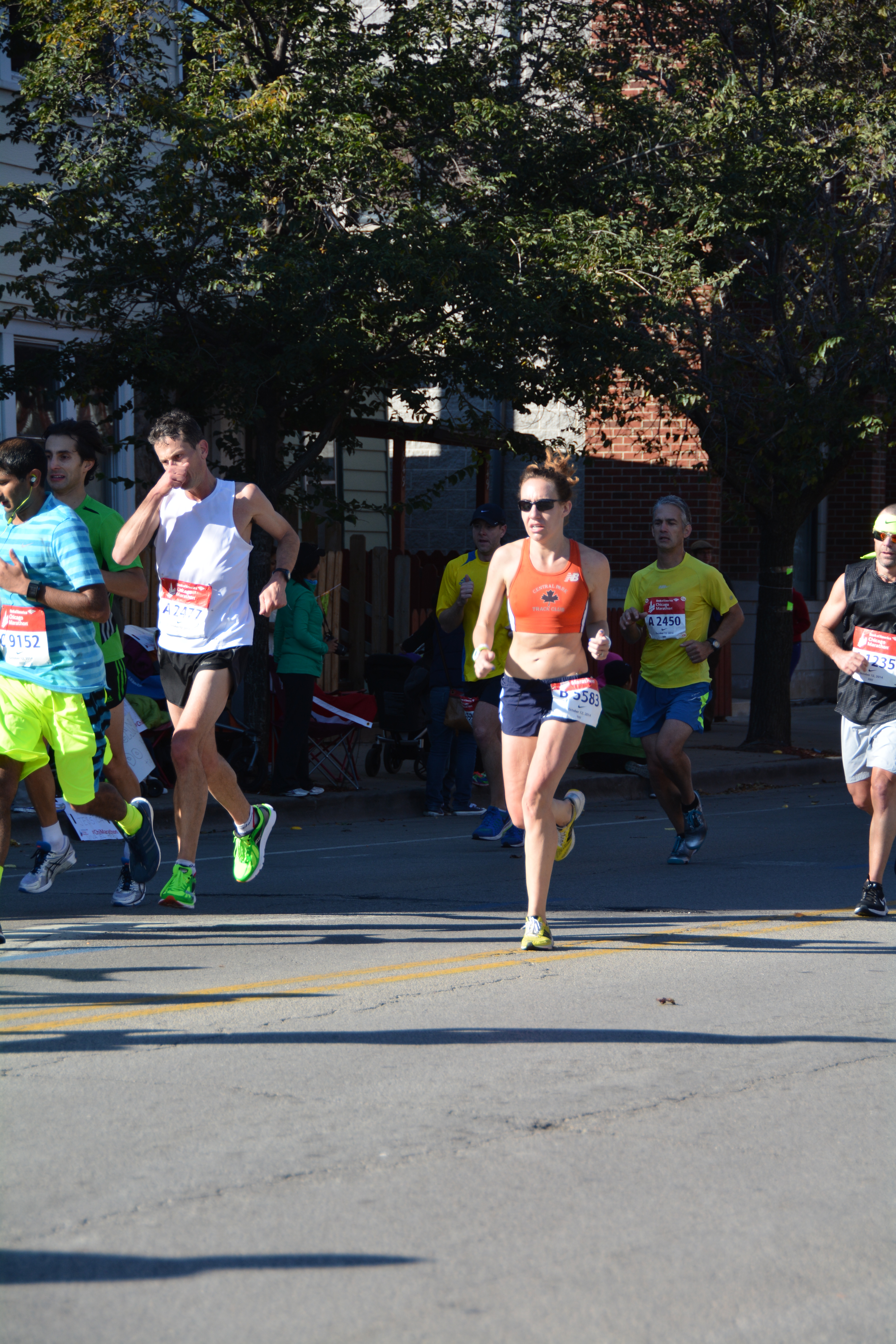
The 3:09:33 I ran at Chicago last weekend just might be the running accomplishment I’m most proud of. I ran my first marathon in 2011, and for it and each of the nine subsequent marathons I’ve run, I’ve been chasing the “0.” The “0,” as in Three-o-nine. The Royal reference is to Jeremy Guthrie’s t-shirt! You could also say the “o” is a Skora “o”! Like this: skora_fw14_fit_m07_mens_quarter_views_1 I went out with the 3:10 pace group at my very first marathon. It wasn’t realistic, but I wanted to BQ in my debut, and there was no 3:15 pace group. I failed. Pace group or no, 3:10 has been the goal in every race since. I’ve come close in a couple – a 3:11 and a 3:12, but each time I found myself going out at or above pace, then slowing towards the end and holding on for dear life. What was the difference this time? I was really ready, and I really wanted it. The key to how both of those things happened was what I call “seeking the uncomfortable.” That’s my way of describing how you have to find that place where you’re uncomfortable while you’re running – both in training and on race day. Once you reach a certain fitness level, it’s not too difficult to go out there and put up miles. However, most schools of thought about training alternate hard days with easy days. A common mistake we all make is running the hard days too easy and the easy days too hard. It’s that middle ground of “comfortable” that some people call junk miles. They might not be totally worthless, but you get the idea. When you’re training, running several consecutive miles at your goal pace is uncomfortable. Intervals above your goal pace are uncomfortable. If you’re not seeking that uncomfortable during training, you’ll never find it on race day, and you certainly won’t hit your goal pace. I joke about being nauseous during the marathon . It sounds like something Pre would say: “If you don’t feel like you’re about to barf, you’re not trying hard enough.” Seriously though, nausea is your body’s way of telling you that you have reached the edge. I’ve felt it when going out too fast. I’ve felt it when trying to maintain a pace above what I have trained to. I was really mindful of seeking the uncomfortable during the training cycle leading up to Edmonton and Chicago. Knowing that Coach Kyle  would be looking at my paces helped me to push harder during training. How many times have you slacked off during a hard training run because you knew no one would ever see your Garmin data? Running with talented friends (Nelson, John, Jeremy, thanks!) can also help you seek the uncomfortable. As a result of all that “uncomfortable” I was hitting target paces more often than not in training. I also threw down my highest mileage month ever in September – 191.36. I boldly tweeted before the race that I was ready to cash that check. I was more relaxed than usual for this race, knowing my preparation was so good. My travel plans threw a small wrench into the works – I couldn’t follow my typical carb-loading regimen because I was flying to Chicago the day before the race with the RHSW. That meant no gels or liquids through security, so I improvised. I decided I was going to load with candy. Smarties are good, but I decided on something a bit more seasonal. That’s right, candy corn! I took some inspiration from a very amusing twitter war . 20141011_115608 The details: 1 package of S’mores flavor (yum); 1 package of carmel apple (meh); about half a bag of “traditional” (yum). Twenty-four doses of 19 candy corns, spaced at half hour intervals. Locked and (carb)loaded. I also sprinkled in a few low residue/low fiber items throughout the day. I couldn’t resist a small piece of steak that my friend Spencer grilled up for us. I can’t say no to USDA Prime. We had great race support – my friend’s wife picked us up from the race expo after we took the train from Midway and a taxi to the expo. Planes, trains, and automobiles – check! In the morning, my friend’s wife and the RHSW dropped me off at a Starbucks just to the west of the course start in Grant Park. I hung out there to stay warm for about a 15 minutes before walking into the park, a runners-only restricted area. This part of the race was pretty well organized in terms of letting me know what I needed to do to get into my start corral (A!) and hit the porta-potties before. If you don’t think an empty colon is essential to race day success, you didn’t run behind the guy I caught up to around mile 17 or 18. Let’s just say white shorts were not a good wardrobe choice for him that day. Anyhow, I got to my corral with plenty of time to spare, and only a few runners clustered around the 3:10 pacers, a great group of guys who paced the whole race (!) – no halfway switch for these guys! Kenny, one of the pacers, had come in from St. Joseph, MO answering a last minute call. I became his “Mizzou buddy” thanks to my sweatshirt. I had plenty of time to warm up – so much so that I hit my Garmin too early and it timed out before the start, so a few aggravating minutes stripping my glove and getting it going during the first mile. I have been in some crowded races before, but nothing like this. I know they try to handle the volume with two waves and corrals, but there was still a crush of runners far past any mile marker I’ve ever perceived it at before. The first few miles were the worst of course, but it just never seemed to thin out – kind of like Boston. I witnessed two runners go down hard after getting their legs cut on corners. I also had a guy go down in front of me trying to get through an aid station. From his exclamation, I’m pretty sure he thought it was the other guy’s fault. The other guy really took off – perhaps fearing a confrontation, but who has the time or energy to throw down during a marathon? The pacers were talking about yet a fourth runner in the closing miles of the race who we caught up to – a girl with some serious road rash on her elbow and knee. I’m not saying I could design a better course, and I love the way this one comes through so many distinct neighborhoods. However, it has a lot of turns, and taking a few of those out in the first few miles might help. My perception of crowding was heightened by running with the pace group. I never really got a count, but I’d say they carried at least 20-30 people through the halfway point. Usually when I run with one everybody sorts out where they are going to slot into position. The pacers did their best, spreading themselves out a bit, but there was just far too much jockeying for position. I don’t want to worry about people throwing elbows when I’m at goal pace. The course is fun, coming through 29 neighborhoods. I won’t try to describe the whole thing – just a few highlights with pictures supplied by my chase team. The RHSW took the first set of shots from one of the many bridges over the river. However, I never saw the RHSW along the course. The crowd wasn’t as bonkers as Boston, but they were loud enough that she wasn’t ever able to get my attention. I’m fairly certain that these are on the Franklin Street Bridge, just past mile 12 coming out of the River North area into the Loop, just before the course turns west into Near West side coming over the Chicago River again. Even before this point, I had decided to get in front of the pace group because I was wasting energy with all the extra shuffling around. DSC_2489 - Copy DSC_2498 - Copy DSC_2499 - Copy DSC_2500 - Copy DSC_2501 - Copy DSC_2502 - Copy DSC_2503 - Copy DSC_2509 - Copy The course comes through Greek Town just past the halfway point. I wish I had worn a Greek soccer jersey to feel the love from my people. Instead, I ran through anonymously Greek, a little intimidated that if I self-identified, someone would speak Greek to me and I would be unable to respond! As to my other people, sadly, the course comes near — but not through — Polish Downtown near the Polish Triangle. Skora is a Polish word that means “skin” or “leather.” As long as we’re talking Skoras, I have to mention that my Skora FITs performed great at this distance once again. There is no shoe I’d rather run a road marathon in. I prefer their slightly thicker outsole and insole to the PHASE and CORE at this distance for two main reasons. First, big city marathons mean big city roads, which aren’t exactly virgin asphalt, i.e., they’re torn up! Second, although I am a forefoot/midfoot striker, there are times at the end of a marathon when I mix in a bit of heel striking, especially if there is a slight downhill. I found myself doing this unintentionally in this race, but I came back out of it when my energy picked back up and I could re-focus my form. I’ve also done it intentionally before to ease calf cramps, but I didn’t have any muscle cramping whatsoever on this course – calf or quad – which I attribute to the flat course and good training. It  wasn’t too hard to identify the location of the second set of on-course photos, taken just before mile 20 on 18th Street in Pilsen, Chicago’s largest Latino community. You can see the Dia De Los Tamales storefront! DSC_2521 - Copy DSC_2522 - Copy DSC_2523 - Copy DSC_2524 - Copy DSC_2525 - Copy DSC_2526 - Copy DSC_2527 - Copy DSC_2528 - Copy DSC_2529 - Copy DSC_2530 - Copy DSC_2531 - Copy DSC_2532 - Copy DSC_2533 - Copy DSC_2534 - Copy DSC_2535 - Copy Btw, Dia De Los Tamales has a pretty cool logo: Dia De Los Tamales Almost home. From here the course comes into Chinatown. At this point the pace group had caught back up to me, and I needed them. I was in mile 22, one of those final 6.2 hard miles that makes the marathon different than anything else. It was great to see a dancing dragon at the turn! I held on to the pace group as we came through miles 22 and 23 and finally made the turn on to Michigan Avenue. This long straightaway heads north for a little more than two miles. At mile 24 I decided I was going for it and dropped the pace group to make sure I hit my target. It worked, and I stayed in front of them through the finish, but around mile 25 or so I had a wave of nausea that had me wondering how long I was going to have to stop to barf, or if I could manage to barf and keep running at the same time. Thankfully, backing off for about 30 seconds cured it, and I was able to start running hard again. I just kept concentrating on what I had been doing the whole race when I wasn’t running with the pace group: picking off and passing runners in front of me. If you’ve never run Chicago before, and you’re like me and didn’t study the course map in too much detail, you should know that the course has one evil trick left up its sleeve for the finish. As I came down Michigan Avenue I kept wondering when I was going to see the finish line, especially since there was a “1 mile to go/25.2” sign on the straight. Cruelly, though, the course makes a sharp right turn on to Roosevelt Rd. just before you hit mile 26. Mile 26 is on a hill! Wait, I thought this course was flat! Well, it’s really just as bridge or overpass, but at that point in the race it might as well be Everest. They even have a huge sign (I think it said 500m or 600m) so you won’t get discouraged and collapse. That turn to the east is a short uphill stretch before you turn left and come north for the real final straight on Columbus Drive. I managed to run that stretch hard, but not anywhere near my usual kick, for fear of barfing again. I could see the clock in the 3:10’s, so I knew I had PR’d, but it took a pacer coming up behind me to reassure me that I’d broken 3:10 on chip time. The RHSW confirmed with a “you did it!” when I got through the finish chute to the reunite area. DSC_2538 - Copy DSC_2539 - Copy DSC_2540 - Copy DSC_2541 - Copy DSC_2542 - Copy DSC_2543 - Copy At this point I picked up a funny look on my face – I heard the RHSW call my name, but I couldn’t locate her! Of course she stopped shooting and let me off the hook, but you can’t see that moment here – I saw her face, not the camera lens! DSC_2544 - Copy DSC_2545 - Copy DSC_2546 - Copy DSC_2547 - Copy DSC_2548 - Copy Here’s a few of the skyline – facing north: DSC_2549 - Copy DSC_2550 - Copy DSC_2551 - Copy DSC_2552 - Copy DSC_2553 - Copy I was satisfied that I had spent most of the race seeking the uncomfortable. There were a few times when I let myself relax and just run with the pace group. However, once I left them the first time I spent the second half of the race pushing, trying to pass and not be passed. I think that this process of continuing to seek the uncomfortable is what led to my first ever marathon negative split – on my tenth try! Simply put, a negative split means you’ve run the second half of the marathon faster than the first half. It’s hard to do, as I can attest. I have a personal nickname for our Great Dane, Ellie: “negative split.” It’s because whenever I take her on a run, it seems like she’s always so eager to get back home that she runs faster on the way back after the turnaround. (“Running, my favorite thing!” “Home, my favorite thing!”) Anyway, the implication of a negative split is that you have trained appropriately to your goal pace, which you’ll be able to hit by running a negative split. Really, mine wasn’t much of a negative split – thanks to the flat course it was almost an even split – both were 1:34 and change. I’ll take it though. It’s a great feeling to know that I can still improve after running marathons for 3 years. I love the Olympic motto: Citius, Altius, Fortius. It’s Latin for “Faster, Higher, Stronger.” If I keep repeating it and seeking the uncomfortable, I’ll get that sub-3:00 yet. Now that I’ve got the “0,” I’d like to get rid of it!

Review: Bearded Brothers Bars – yummy energy, no chemistry degree required! @beardedbros

I got my hands on a sampler pack of Bearded Brother Bars  (hereinafter “BBBs”) recently. After trying my first one, it was all I could do to not go Cookie Monster on the lot. I’ve always been into fueling naturally, but I have also tried a lot of the mainstream bars out there. Typically, my reaction has been “Blech! How am I going to choke the rest of this thing down?” Not so with BBBs.

A few disclaimers – I was provided these samples basically for the cost of shipping them too me. If you think that clouds my objectivity, you don’t know how cheap I am. I’m not a nutritionist, or even a supertaster (although my wife is). So, this isn’t going to read like some pretentious Wine Spectator review. I typically train “fasting,” but I do eat at other times. I will take in some calories before a hard and/or long run (18+ or lots of goal pace miles or both).

I am not going to make any outrageous claims about the performance-enhancing benefits of these bars. Do BBBs work? You bet. Each bar gave me about 200-250 calories. So why BBB? Simply put, they’re yummy and natural. You can’t say that about very many energy bars. If you can’t gag it down, you’re not fueling.

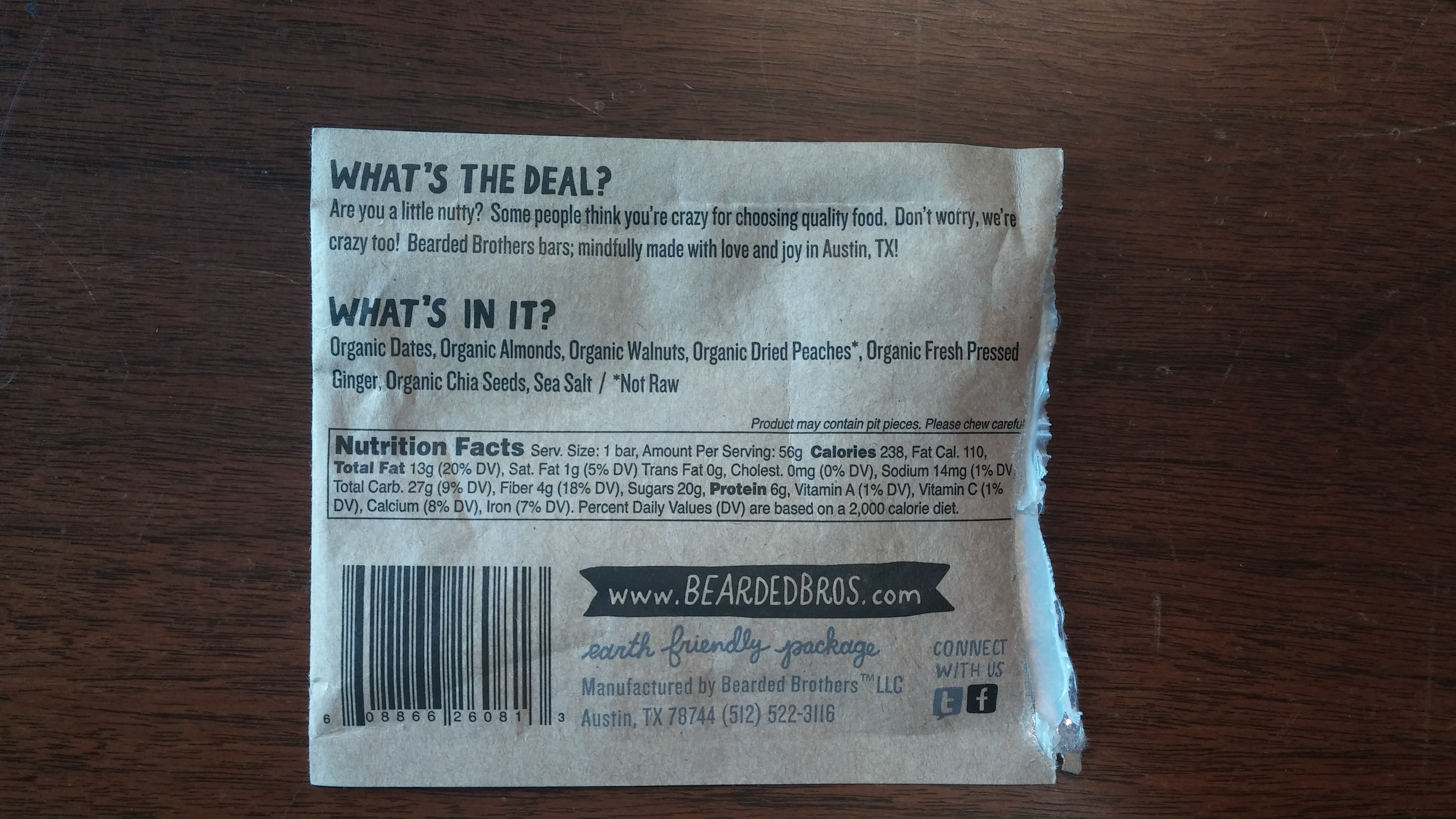
What’s in ’em: dried fruits and seeds generally. Some varieties have nuts, some are nut free (because sometimes you feel like a nut, sometimes you don’t … feel like going into anaphylactic shock).

Here’s a representative nut-free flavor, “Radical Raspberry Lemon”:

20140804_160133 20140804_160140

What ain’t in ’em: non-organic ingredients, GMOs, soy, animals and animal products (things that vegans don’t eat), gluten, un-raw things (that have all their goodness cooked out of them), unnatural stuff – no unpronounceable names here – no chemistry degree required!

How did I use them? Like I said, I typically train in a fasting state. That’s a fancy way of saying that I don’t eat anything before I go for my morning run. Given that most training runs are less than 15 miles, you are never going to run out of glycogen at those distances. Thus, all the fuss about fueling is usually much ado about nothing. I tend to scoff at people who are headed out for a 5 mile run while carrying a half gallon of Gatorade and 5 GUs (umm, net gain?). On the other hand, replacing glycogen stores after training is a good thing – I usually take in some carbs as part of my post-training meal, usually in the form of fruit. However these BBBs are a delicious and convenient alternative. That’s when I ate most of them – right after getting back from a run. Mmm-mmm good.

The most challenging test for any “fuel” is how your body will tolerate it when it’s in your gut during a run. I put both the “Mighty Maca Chocolate” and “Bodacious Blueberry Vanilla” BBBs to this test. I ate one bar right before each of two different challenging long runs and I’m happy to report that my tummy didn’t complain a bit. If anything, it said “thanks!” Each BBB was joined by a double espresso with heavy whipping cream and a glass of water pre-run. I felt great on both runs.

Oh yeah, what’s maca, you ask?

20140804_160037

Maca powder is claimed to have certain *ahem* benefits as a supplement, although the BBB folks aren’t making that claim on their packaging, so don’t misunderstand me or them. Nevertheless, being the curious sort, when my copy of the Journal of Ethnopharmacology came in the mail recently (kidding!) I noticed a article titled: “A pilot investigation into the effect of maca supplementation on physical activity and sexual desire in sportsmen.” Here’s a link to an abstract. Male cyclists completed a before-and-after 40km time trial, and also a sexual desire inventory. Supplementation improved both. Since it’s a natural and somewhat obscure supplement, the mechanisms of action are as of yet unknown. Your results may vary.
Anyhow, if you’re not into that, this is the only flavor that has the powder, if I’m not mistaken. It was my favorite though, with blueberry nearly tied for the top spot.

I also quite enjoyed the “Colossal Coconut” and “Fabulous Ginger Peach” (probably the most flavorful – I love ginger!). I even liked the “Outrageous Orange Kale” but it doesn’t seem to be available at the moment. Maybe it’s not kale season in TX right now.

Apparently, I liked them so much that I forgot to take a picture of one of them before consuming them all. I’ve just got wrappers. However, the sense they appeal to is not sight.

How much did I like these?

  • I wanted to consume all of them at once.
  • I wanted to ration them out so they would last longer (yep, I’m an enigma).
  • I didn’t share.
  • After they were gone, I found myself checking my pantry to see if perhaps I missed one.

I’m going to have to get some more!